The Rise of Digital Guidance
Picture this: It's 3 AM, you're wide awake wrestling with a career decision, and your phone offers an enticing promise – "Ask your AI coach for advice." With a few taps, you're receiving personalized guidance without scheduling, without judgment, and without the hourly rate of a human coach.
Welcome to 2025, where AI coaches never sleep, never get tired, and never forget your goals.
But as these digital companions become increasingly sophisticated, a question looms: Will the algorithms eventually render human coaches obsolete? Or is there something irreplaceable about human connection when it comes to genuine transformation?
What Technology Can Already Do (And It's Impressive)
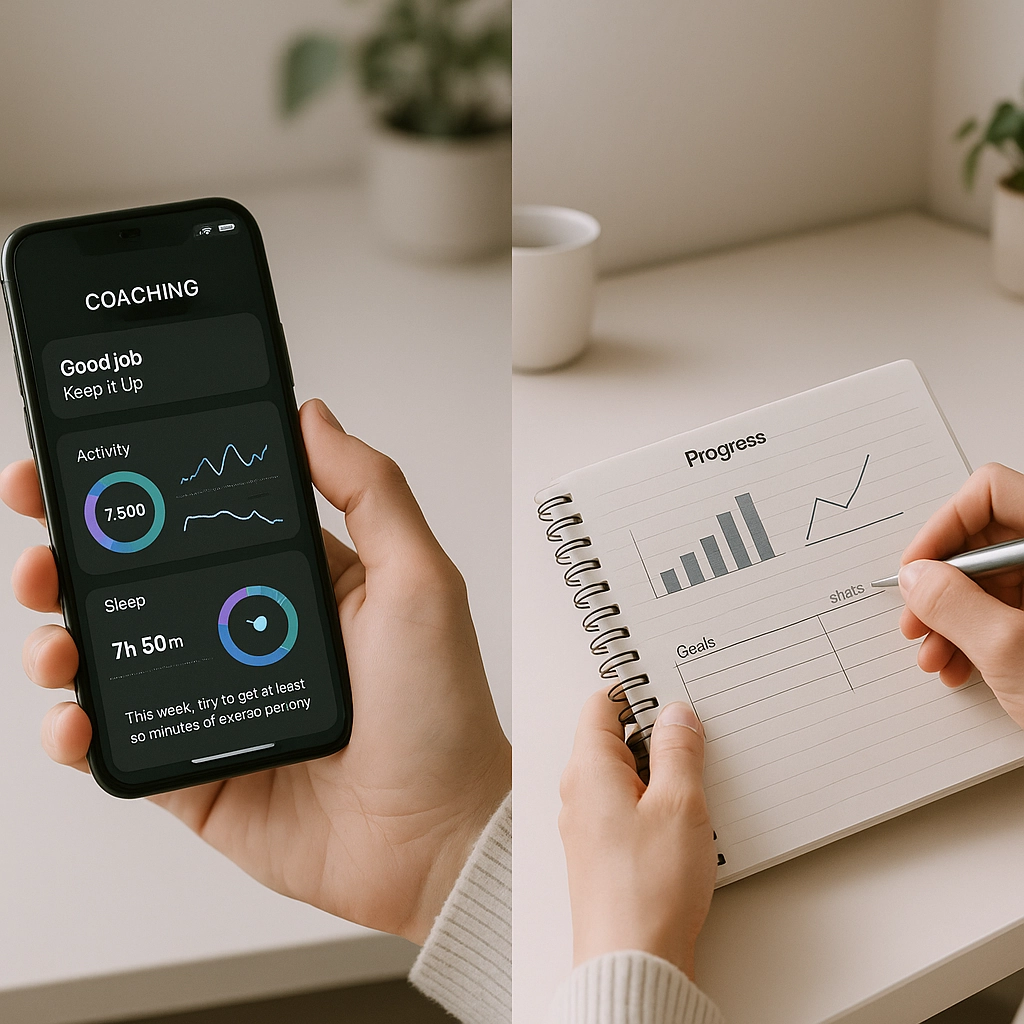
Let's give technology its due credit. Today's AI coaching tools can:
- Analyze patterns in your behavior that even you might miss
- Provide consistent accountability without emotional fluctuation
- Deliver personalized recommendations based on thousands of data points
- Scale personalized guidance to millions simultaneously
- Offer help at a fraction of traditional coaching costs
Recent research from Stanford University even found that in structured goal-attainment exercises, AI coaches produced results comparable to human coaches for certain objectives. The technology isn't just promising – it's already delivering tangible results.
The Unparalleled Human Element
Yet for all its algorithmic brilliance, technology still can't replicate what happens in the space between two humans.
"The most profound growth happens in relationship," says transformational coach Michael Neill. "Not in relationship with information, but in relationship with another conscious being who truly sees you."
Human coaches bring unique qualities to the table:
1. Intuitive Discernment
Great coaches often sense what's happening beneath your words – the hesitation in your voice, the enthusiasm that doesn't quite reach your eyes, or the limiting belief you're not even aware you hold. They respond not just to what you say, but to what you don't say.
2. Adaptive Presence
Human coaches adjust their approach in real-time based on subtle emotional cues. They might completely abandon their planned approach when they sense resistance or unexpected openings for breakthrough.
3. Authentic Connection
The feeling of being truly seen, heard, and understood by another human creates a neurobiological safety that allows for vulnerability – and vulnerability is where transformation begins.
4. Lived Experience
Human coaches draw from their own struggles, failures, and triumphs – not just data. This creates resonance beyond information; it creates wisdom.
Where AI Falls Fundamentally Short
For all its capabilities, AI coaching has inherent limitations that go beyond current technological constraints:
The Empathy Gap
AI can simulate empathy but cannot feel it. The difference might seem philosophical until you're in the middle of a personal crisis. AI cannot truly understand fear, heartbreak, or existential doubt because it has never experienced them.
The Creativity Ceiling
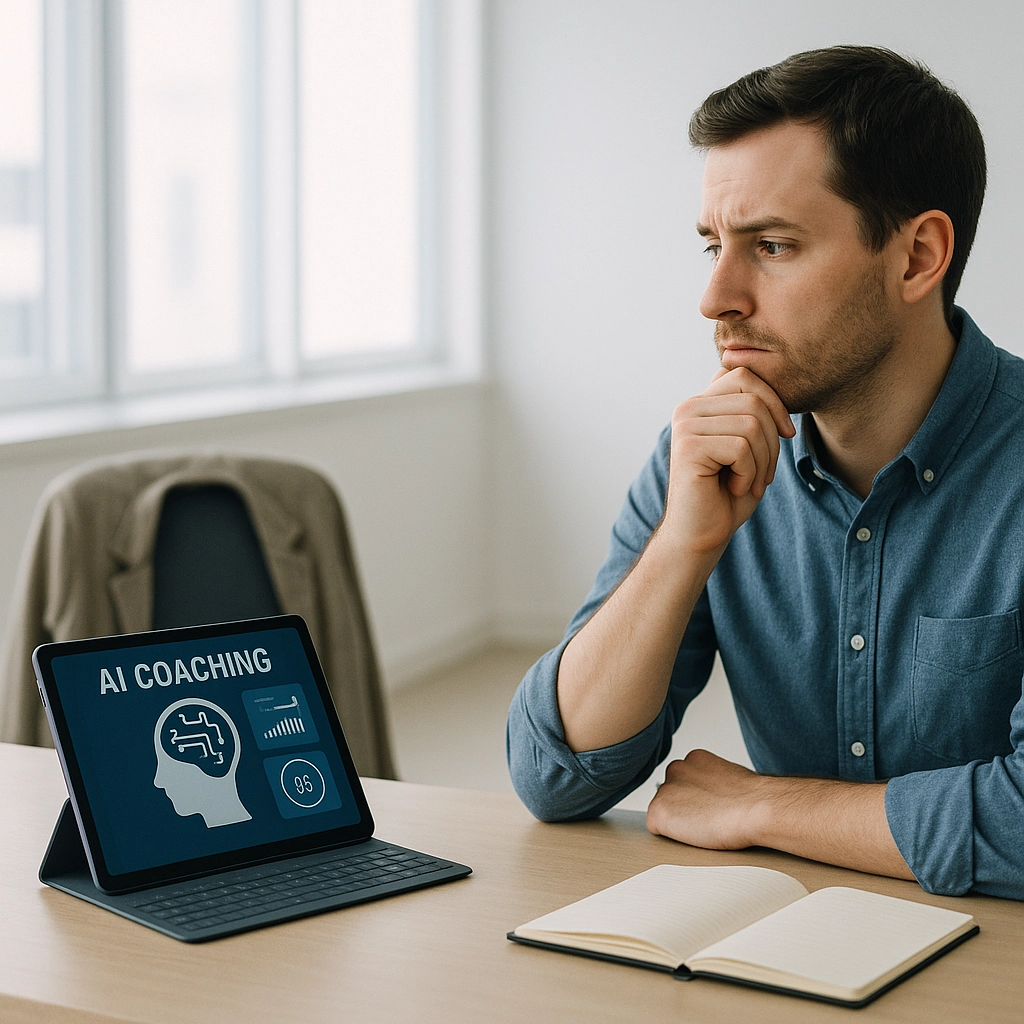
Human coaches often help clients break through to solutions they couldn't have anticipated. This requires a creative leap that AI – built on existing patterns – fundamentally struggles with. AI excels at optimization but falters at transformation.
The Connection Paradox
Perhaps most importantly, AI cannot form genuine connection. The feeling of being deeply understood by another conscious being triggers neurological and psychological responses that facilitate change. Even when we intellectually know we're talking to AI, our emotional brain processes the interaction differently than human connection.
As Brené Brown points out: "Connection is why we're here. We are hardwired to connect with others, it's what gives purpose and meaning to our lives."
The Future: Augmentation, Not Replacement
The most likely future isn't one where technology replaces human coaching but where it transforms the coaching landscape through augmentation. Here's what this might look like:
1. AI as the Front Door
AI coaching makes personal development more accessible, creating an entry point for millions who might never have considered working with a coach. As users experience initial benefits, many will seek deeper transformation through human coaches.
2. Enhanced Human Coaching
Tomorrow's coaches will leverage AI to amplify their impact. Imagine a coach who can review AI-generated patterns from your daily journal entries, sleep data, and communication styles before your session – allowing them to focus entirely on the human elements during your time together.
3. Tiered Support Systems
We're moving toward ecosystems where AI handles foundational coaching (habit tracking, basic accountability, information delivery) while human coaches focus on deeper work (identity shifts, emotional processing, complex decision-making).

Finding Your Optimal Blend
So how should you approach this new landscape as someone seeking growth? Consider these principles:
Know Your Growth Zone
For structured goals with clear metrics (exercise consistency, productivity systems, learning new skills), AI coaching may offer everything you need at a fraction of the cost.
For transformational goals involving identity, emotional patterns, or major life transitions, human coaching creates a container that technology simply cannot replicate.
Start Where You Are
If budget constraints have kept you from coaching entirely, AI tools offer a legitimate starting point. Apps like Woebot for mental health, Noom for health coaching, or even ChatGPT for goal clarification can initiate meaningful progress.
But recognize when you're ready for the next level. As James Clear notes, "You don't rise to the level of your goals. You fall to the level of your systems." Sometimes the most important system is human support.
Embrace the Hybrid Future
The most powerful approach may be combining both. Use AI for consistency, data tracking, and 24/7 support, but complement it with human coaching for breakthrough moments, complex challenges, and the accountability that comes from being witnessed by another person.
The Verdict: Irreplaceable but Transformed
Will technology replace human coaching? The evidence points to a clear "no" – but that doesn't mean the coaching industry won't undergo profound transformation.
Technology will make personal development more accessible, data-informed, and consistent. It will handle much of what entry-level coaches currently provide. And it will raise the bar for human coaches to deliver what only humans can: presence, connection, and the creative wisdom that comes from lived experience.
The future belongs not to AI alone, nor to coaches who ignore technological advancement, but to those who understand how to leverage both for maximum human flourishing.
At Satori Prime, we're embracing this integrated future – using technology to enhance our human-centered approach rather than replace it. Because while information can be automated, transformation happens in relationship.
What's your experience with AI coaching tools? Have they helped you, or do you find yourself missing the human element? We'd love to hear your thoughts in the comments below.