
You know the feeling. The world dissolves. The ticking clock becomes a silent observer. Your internal critic: that nagging voice that usually questions your every move: finally shuts up. You aren't just doing the work; you are the work.
This is Flow. It’s the "zone," the "pocket," the state of peak human performance where we feel our best and perform our best. But for most high performing leaders, flow is treated like a rare, mystical visitor: a lightning strike they hope hits them once a week while they’re grinding away at their desks.
Here’s the cold, hard truth: If you are waiting for flow to find you, you’ve already lost the game. Flow isn't a gift from the gods; it’s a biological state of nervous system regulation. If you want to master how to make more money, nervous system capacity is your primary currency.
It’s time to stop chasing productivity hacks and start understanding the internal architecture of success.
The Mirage of the Hustle
Most leaders are addicted to the "grind." They believe that if they just push harder, sleep less, and white-knuckle their way through the day, they’ll eventually hit their goals. But look at your internal state. If your nervous system is perpetually stuck in a "fight-or-flight" response, you aren't in a position to lead; you’re in a position to survive.
High performance isn't about how much stress you can endure; it’s about how much expansion your system can handle. When you operate from a place of dysregulation, your brain’s prefrontal cortex: the CEO of your mind: goes offline. You become reactive, short-sighted, and emotionally fragile.
At Satori Prime, we tell our clients: "Stop trying to make yourself feel better and simply get better at feeling."™
Why? Because flow states require an open channel. If you are suppressing your emotions or running from your discomfort, you are effectively putting a kink in the hose of your own brilliance. You cannot access the visionary heights of leadership if you are terrified of the depths of your own internal landscape.
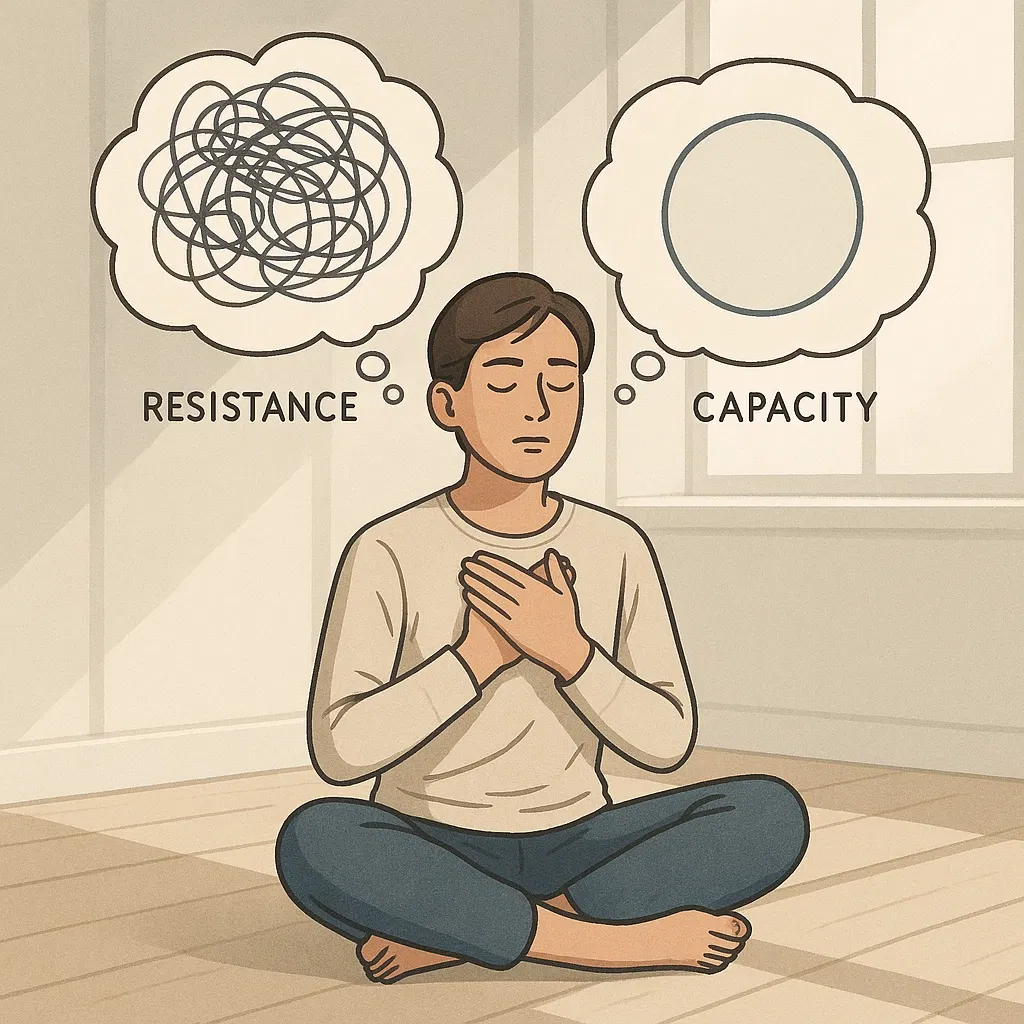
The Nervous System: Your Financial Thermostat
Let’s talk about your money mindset. Most people think making more money is a matter of strategy or "manifesting." In reality, your income is tied directly to your nervous system’s capacity to hold the "charge" of wealth.
Think of your nervous system like a circuit board. If you try to run 10,000 volts through a system built for 100, you’re going to blow a fuse. This is why people self-sabotage right when they’re about to hit a breakthrough. The discomfort of the "new" feels like a threat to the survival-based brain.
How to make more money? Nervous system regulation is the answer. When you regulate your system, you increase your tolerance for uncertainty. You become able to sit in the "fire" of a high-stakes negotiation or a market shift without losing your center.
When you are regulated, you enter a state of "relaxed alertness." This is the fertile ground where flow states grow. In flow, your brain moves from Beta waves (the frantic, analytical state) into the Alpha-Theta border: a psychedelic bridge where intuition and logic dance together. This is where the $10M ideas live. This is where you see patterns your competitors miss.

Visualizing the psychedelic bridge of the mind: A kaleidoscope of neural pathways firing in perfect, vibrant symmetry.
The Anatomy of the Flow Cycle
Flow isn't a toggle switch; it’s a cycle. If you don't understand the stages, you’ll likely quit right before the magic happens.
- The Struggle: This is the phase most leaders hate. It’s messy. It’s frustrating. You’re loading your brain with information, and nothing seems to fit. Your nervous system feels tight. Most people quit here and reach for a distraction (social media, sugar, caffeine). But the struggle is the prerequisite for the release.
- The Release: This is where you let go. You stop trying to solve the problem. You take a walk, breathe, or meditate. You shift from "doing" to "being." You can learn more about this shift in our guide on how mindset affects success.
- Flow: The "Supernova" phase. The subconscious takes over. Your sense of self vanishes. You are performing at 500% of your normal capacity.
- Recovery: Flow is expensive. It burns through neurochemicals like dopamine and norepinephrine. If you don't prioritize active recovery, you will burn out. High performing leaders who skip this step find that their "flow" becomes increasingly rare.
Leadership as a Transmutation
Leadership is the art of regulating the energy of a room. If you walk into a board meeting with a jagged, anxious nervous system, everyone in that room will subconsciously mirror that anxiety. You’ve just lowered the collective IQ of your team.
A visionary leader uses their own regulated state to pull their team into "group flow." This is only possible when you’ve done the internal work. You have to stop chasing and start feeling.
When you understand the subconscious mind and how to reprogram it, you realize that your external reality is just a reflection of your internal frequency. If you want a high-performing company, you must become a high-performing biological vessel.
Practical Triggers for High Performing Leaders
How do you practically engineer these states? It’s about building the blocks of regulation so flow becomes your default mode, not a lucky accident.
- The 90-Minute Block: Protect your time. Flow takes about 20 minutes to enter. If you get a notification, you’ve reset the clock.
- The Challenge-Skill Balance: Flow lives on the edge of your comfort zone. If a task is too easy, you’re bored. If it’s too hard, you’re anxious. Find the 4% edge where you are slightly over-leveraged but still capable.
- Embodied Presence: Stop living in your head. When you feel tension, don't analyze it. Feel it. Where is it in your body? Breathe into it. This is the core of our philosophy: "Get better at feeling."
- Radical Recovery: High performance requires high-quality rest. This isn't scrolling on your phone; it's deep sleep, sensory deprivation, or time in nature.
Why Your Transformation Isn't Working
You’ve read the books. You’ve gone to the seminars. So why are you still feeling stuck?
It’s because most personal development focuses on the "mind" while ignoring the "body." You cannot think your way out of a physiological state. If your nervous system is convinced that "more money" equals "more danger," it will keep you small to keep you safe.
This is why your transformation is not working. You’re trying to install new software on a crashed operating system.
At Satori Prime, we focus on the hardware. We help you reset the nervous system so that high performance feels like home, not a threat. When you regulate your system, the "how to make more money" part becomes a natural byproduct of your increased capacity to handle reality.

The Final Frontier: Getting Better at Feeling
The ultimate competitive advantage in the 21st century isn't your tech stack or your marketing budget. It’s your ability to remain present and regulated in a world designed to keep you distracted and dysregulated.
The high performing leaders of the future are the ones who have mastered their internal alchemy. They don't run from fear; they use the energy of fear to fuel their flow. They don't avoid discomfort; they lean into it until it dissolves into clarity.
Stop trying to fix yourself. You aren't broken; you’re just restricted. Open the channels. Regulate the system. And watch as the world bends to match the frequency of your flow.
Remember: The universe doesn't give you what you want; it gives you who you are. Who are you becoming in the silence between your thoughts?
If you're ready to stop the chase and start the transformation, explore how we can help you reprogram your brain and master your state. Your next level of leadership isn't out there: it's waiting within the depth of your own capacity to feel.