
Most of us have been lied to. We’ve been told that stress is a "mindset" problem. That if we just meditated more, thought more positively, or bought a better planner, the crushing weight of our to-do lists and the tightness in our chests would simply vanish.
But here is the visionary truth: Stress isn't a thought. It’s a physiological event.
At Satori Prime, we’ve seen high-level CEOs, burnt-out parents, and aspiring entrepreneurs all fall into the same trap: trying to "think" their way out of a body that feels like it’s under attack. If your nervous system is stuck in survival mode, no amount of "affirmations" will save you. You’re essentially trying to update the software on a computer that’s literally on fire.
If you want to unlock true high performance, wealth capacity, and a deep sense of peace, you have to stop managing stress and start regulating your nervous system. Here are the seven biggest mistakes you’re making with stress and how to pivot toward mastery.
1. Treating Stress as “All in Your Head”
The biggest mistake is believing that stress starts and ends with your thoughts. You overanalyze the problem, you replay the conversation, and you try to logic yourself into feeling better. But while you’re doing that, your heart is racing, your breath is shallow, and your muscles are braced for impact.
Stress is a body state. When your nervous system detects a threat (even if that threat is just a passive-aggressive email), it pulls the alarm. Your "thinking brain" actually shuts down to save energy for survival. Trying to solve a problem in this state is like trying to drive a car with no wheels.
The Regulation Fix: Start with the Body, Not the Story
You have to signal safety to your body before your mind can find a solution. Try the physiological sigh: inhale deeply through your nose, take a quick second sip of air at the top, and then let out a long, slow exhale through your mouth. Do this three times. You aren’t solving the problem yet; you’re just putting out the fire so you can think clearly again.
2. Trying to Eliminate All Stress
We’ve been sold this dream of a "stress-free life." We think that if we reach a certain level of wealth or success, we’ll finally be "relaxed." This is a dangerous myth. Life is inherently dynamic. Growth requires pressure.
When you aim for zero stress, every new challenge feels like a personal failure. You become fragile. High-stakes leadership isn't about avoiding the storm; it’s about being the calmest person in it.
The Regulation Fix: Aim for Flexibility, Not Zero Stress
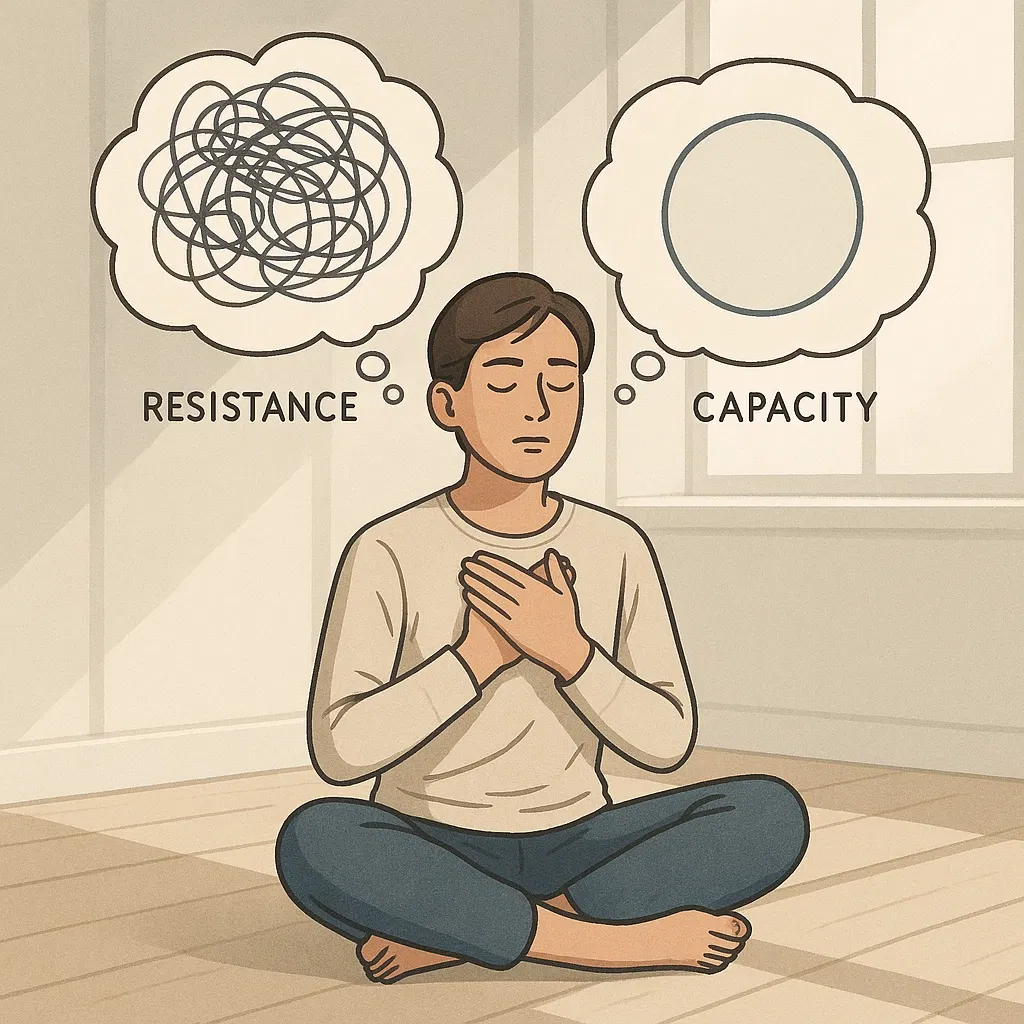
The goal isn't to never get stressed; it’s to increase your nervous system capacity. Think of your nervous system like a rubber band. You want it to be able to stretch (activation) and then return to its original shape (rest). This is called "resilience." Instead of asking "How do I stop being stressed?" ask "How quickly can I return to baseline?"
3. Numbing Out Instead of Calming Down
After a long, high-pressure day, what do you do? Most people reach for a glass of wine, scroll through TikTok for two hours, or binge-watch Netflix. We call this "relaxing," but it’s actually "numbing."
Numbing is an escape. It’s a way to tune out the noise without actually discharging the stress from your system. You wake up the next morning feeling just as tight and anxious as you did the night before because the physiological "charge" of the stress is still trapped in your tissues.
The Regulation Fix: Choose True Regulation Over Pure Escape
Before you hit the couch, give your system 5 minutes of actual discharge. Shake your arms and legs. Do some gentle stretching. Practice box breathing (inhale 4, hold 4, exhale 4, hold 4). Once your system feels grounded, then enjoy your show. You’ll find you actually enjoy it more because you aren't using it as a life raft.
4. Believing Every Stress Thought
When you’re in a high-stress state, your brain becomes a master storyteller: and it’s usually writing a horror script. "I’m going to lose everything." "Everyone is judging me." "I’m not cut out for this."
These aren't truths; they are symptoms of an activated nervous system. Your brain is simply trying to find a "reason" for why your body feels so agitated. If you believe these thoughts, you’ll make decisions based on fear rather than vision.
The Regulation Fix: Separate the State from the Story
Next time you’re spiraling, say out loud: "This is a stress brain talking, not the whole truth." Labeling the state immediately creates distance. Don't try to argue with the thoughts. Just regulate the body, and watch how the story naturally changes as your system settles.
Curious about the subconscious scripts running your life? Download our Free Survival Patterns Guide to see what’s really driving your stress.
5. Isolating When You’re Overwhelmed
The "Lone Wolf" mentality is a plague in the world of high performance. We think that being "strong" means handling everything ourselves. We cancel plans, stop answering texts, and pull inward.
The problem is that humans are biologically wired for co-regulation. Our nervous systems are designed to calm down in the presence of other safe, regulated humans. When you isolate, you’re cutting off one of the most powerful tools you have for emotional healing.

The Regulation Fix: Borrow Someone Else’s Calm
You don’t need someone to fix your problems; you just need someone to be with you. Call a friend and say, "I’m super stressed. Can we just talk for ten minutes about nothing important?" Or sit in a coffee shop just to be around the hum of other people. Connection isn’t a luxury; it’s a biological necessity for regulation.
6. Only Regulating in Emergencies
Most people wait until they are at a 10/10: panic attack territory: before they try a breathing exercise. Then, when it doesn't immediately fix everything, they say, "This stuff doesn't work for me."
Regulation is a skill, not a rescue mission. If you only practice when the building is on fire, you won't know where the fire extinguisher is. You have to build the "muscle" of regulation during the quiet moments so it’s available when things get intense.
The Regulation Fix: Practice When You’re at a 3, Not a 9
Integrate "micro-doses" of regulation throughout your day.
- Three deep breaths before you open your laptop.
- A 2-minute walk after a meeting.
- A quick body scan while you’re waiting for the elevator.
These small reps build the infrastructure that allows you to stay poised when the stakes are high.
7. Ignoring the Basics and Blaming Willpower
We beat ourselves up for "lacking discipline" or "being weak" when we can't handle stress, yet we’re running on 5 hours of sleep, 4 cups of coffee, and no real food.
Your nervous system is a physical organ. It requires fuel, rest, and hydration to function. When your "biological basics" are neglected, your threshold for stress drops significantly. What would normally be a minor annoyance becomes a catastrophic event because your system simply doesn't have the resources to handle it.

The Regulation Fix: Support the Hardware
Think of sleep, nutrition, and hydration as "regulation insurance." If you want to expand your wealth capacity and leadership presence, you have to treat your body like the high-performance vehicle it is. You can’t white-knuckle your way through a depleted biology.
The Path to Mastery
Stress isn't something to be feared or avoided. It is simply information. It’s your body’s way of saying, "I don't feel safe right now." When you learn to listen to that signal and respond with regulation instead of reaction, everything changes.
Your relationships improve because you’re no longer projecting your activation onto your partner or children. Your leadership expands because you can hold space for complexity without folding. Your bank account grows because you’re making decisions from a place of vision, not survival.
This is the work we do at Satori Prime. We don't just give you "tips"; we help you rewire your system for a completely different experience of reality.
Ready to stop surviving and start thriving?
We want to help you master your internal state so you can dominate your external world. For a limited time, we are offering our flagship Nervous System Mastery program at a 50% discount. This is the blueprint for high performers who are ready to unlock their next level of capacity.
Click here to claim your 50% discount on Nervous System Mastery!
And if you’re ready for a deeper, more personalized transformation, let’s talk. Our coaches specialize in helping visionary leaders break through their glass ceilings by mastering the science of the nervous system.
Book Your Transformation Call Here
Stop letting stress run the show. Your potential is waiting on the other side of your next exhale.