Anyone keeping an eye on trends in personal development, biohacking, or human optimization has likely heard the three letters: HRV. For a long time, we measured health and readiness through simple things like resting heart rate, calories burned, or how much we could bench. In 2025, those aren’t outdated—but if you really want to monitor and maximize your performance, you need to be looking at your heart rate variability (HRV).
High-performing athletes, executives, and entrepreneurs are swapping old school metrics for HRV because it gives a deeper, real-time insight into how well their bodies (and minds) can handle stress, recover, and perform. In this article, we’ll break down what HRV really measures, why it matters so much, and how you can start using it to unlock your own best performance—without turning your life into a science experiment.
What Is Heart Rate Variability, Really?
Heart rate variability is not about how fast your heart is beating; it’s about how adaptable your heart is. While the average person’s heart beats around 60-80 times per minute at rest, those beats don’t land at regular, metronome-like intervals. A healthy heart varies the time between each beat, speeding up or slowing down in response to what your body needs. That bounce, that flexibility, is what HRV measures.
The higher your HRV, the better your body can switch gears between effort and recovery. In scientific terms, it’s a direct window into your autonomic nervous system, especially how well your parasympathetic (“rest and digest”) branch balances out your sympathetic (“fight or flight”) branch. A high HRV means your system is agile and adaptive; a low HRV tells you that stress or fatigue is outweighing your ability to recharge.
Why HRV Matters for High Performers
Gone are the days when pushing to the point of burnout was considered the badge of a true performer. Today’s elite know: Performance is cyclical, not linear. The ability to recognize when your body needs rest—before you crash out—is a game changer.
Here’s why high HRV is now the gold standard for high performers:
- Early Stress Detection: HRV dips before you feel tired, sick, or burned out. It’s a signal to pull back before issues become obvious.
- Total Load Awareness: HRV tracks more than training fatigue—it reflects the cumulative impact of sleep, workload, nutrition, family stress, and even emotional processing.
- Customized Training and Recovery: By tracking HRV trends, athletes refine workouts and rest days. Entrepreneurs and executives can fine-tune their daily routines and load.
HRV is your “dashboard warning light” for the total stress-load you’re under. And if you want to outlast—not just outperform—the competition, it pays to notice the warning signs early.
How Does HRV Work? An Everyday Example
Imagine two high-level entrepreneurs: Both run multi-million-dollar businesses, both train in the gym, both have demanding families. The first one pushes through every workout, drinks loads of coffee, and works till midnight. The other checks their HRV every morning:
- On high HRV days, they go hard—meetings, training, big decisions.
- On low HRV days, they delegate, prioritize sleep, and meditate.
Over weeks and months, the second entrepreneur gets fewer injuries, bounces back from setbacks faster, and is less likely to hit major burnout. That’s not luck—that’s data-driven self-care.

How to Measure Your HRV
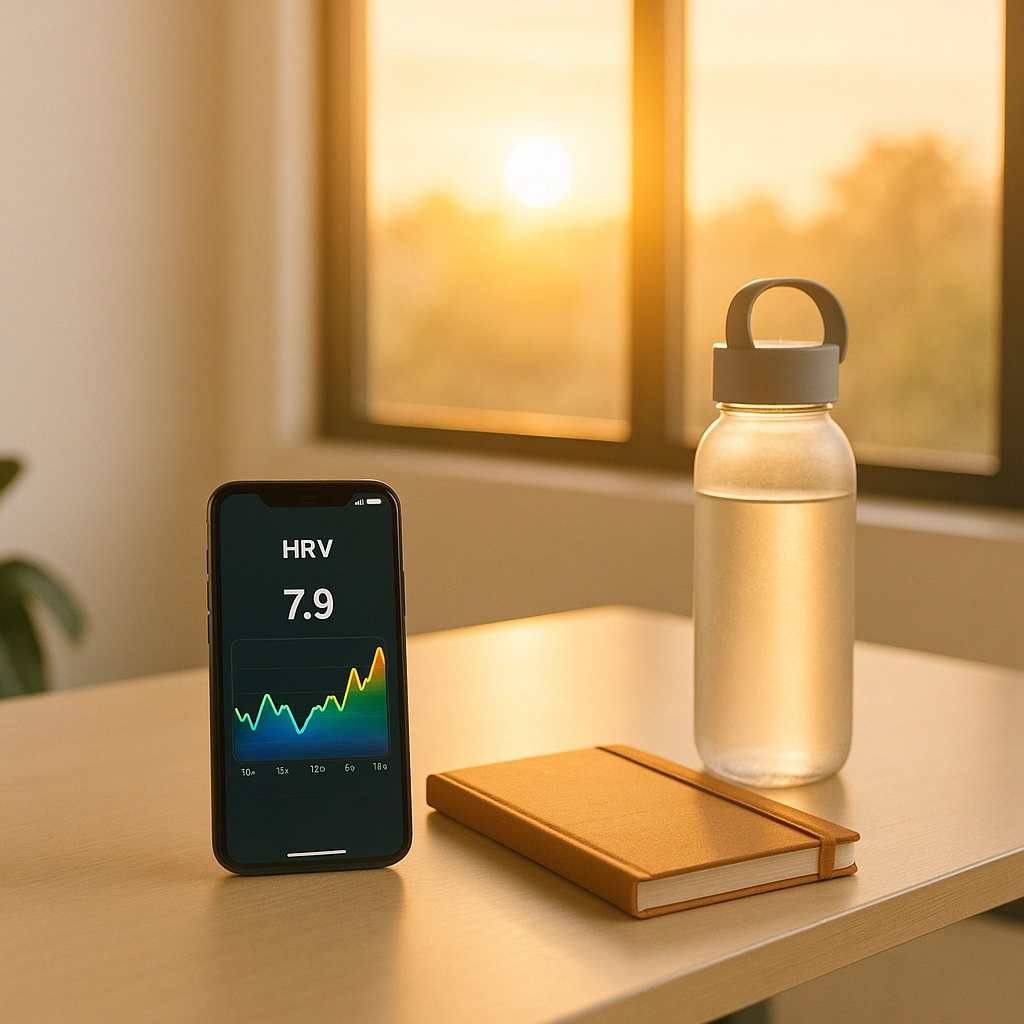
With the rise of smart tech, measuring HRV is easier than ever—but accuracy matters. The best time to check your HRV is first thing in the morning, before coffee, emails, or exercise. While many fitness trackers now display HRV, the most accurate readings still come from chest straps like those from Polar or Wahoo, or advanced finger pulse sensors.
There are three main types of HRV readings:
- 24-hour monitoring: Best for big-picture trends, but can be overwhelming and hard to interpret.
- Short-term (about 5 minutes): Done under resting conditions; this is recommended for daily checks.
- Ultra short-term (less than 5 minutes): Less precise, but useful for quick checks.
Consistency (same time, same position each day) gives you the most actionable data.
What’s a “Good” HRV Score?
There’s no single number for all humans—HRV is deeply individual. Some people naturally run higher or lower. Instead of comparing your number to someone else, measure progress against yourself. The key is your trend line:
- Increasing HRV: Recovery is good, workload is appropriate.
- Decreasing HRV: You might be approaching overload—pull back or prioritize recovery.
Listen for “anomalies”—if your HRV suddenly tanks and stays low, that’s a flag to adjust.
How to Boost Your HRV: Evidence-Based Strategies
The awesome news? HRV is not static. Like any aspect of fitness or wellbeing, it can improve—with the right focus.
1. Progressive Overload (But Make It Personal)
Apply the “no pain, no gain” approach? Time to refine it. Progressive overload (gradual increases in challenge) works, but only if you’re not already maxed out. The trick: Listen to HRV and time your intensity spikes for days when your system is ready.
Try This: Plan your toughest projects or workouts for naturally high-HRV days. On a low-HRV day, stay active but knock back the intensity. This builds capacity without backsliding into chronic stress.
2. Prioritize Recovery Techniques
You can’t “out-grind” a bad recovery plan. High performers who thrive know this:
- Dedicated stretching & mobility work: Improves nervous system function.
- Foam rolling and massage: Eases muscle soreness and frees up tension.
- Active recovery (light walking, yoga): Keeps the body primed without pushing it over the edge.
Don’t save this stuff for “when you have time”—schedule it in just like calls and workouts.
3. Master Your Nervous System
HRV improves when you train your nervous system to find calm efficiently—even in chaos. This is where breathwork, meditation, and mindfulness come in.
- Box breathing: Inhale, hold, exhale, hold, all for 4 counts. Repeat 5-10 times.
- 5-10 minutes of mindfulness meditation: Science-backed for a reason. It quickly balances your sympathetic and parasympathetic systems.
At Satori Prime, we coach leaders to tap into nervous system regulation as a foundation. Want to get started? Check out our nervous system regulation tips right here.

4. Correct Lifestyle Drains
It’s not all yoga and Oura rings—your basic habits matter. To boost (or protect) your HRV:
- Prioritize sleep: 7-9 hours, with a consistent schedule.
- Cut out late-night screens and caffeine.
- Eat enough real food, not just protein bars and espresso.
- Stay hydrated. Even mild dehydration hits your HRV.
5. Rebuild Your Relationship with Stress
Not all stress is “bad”—it’s how you carry it, and how well you recover. HRV lets you dial in the “dose” of challenge you can handle, the same way athletes periodize training. Consider stress-management skills at the core of your performance toolkit, not an optional extra.
Bringing HRV Into Your Routine—The Satori Prime Way
The bottom line: HRV is more than a tidbit—it's a living, breathing performance dashboard. Used right, it helps you avoid the burnout cycle, supercharge your gains, and develop a much smarter, longer game.
- Track HRV every morning for a month.
- Pair your readings with notes on training, sleep, work, and mood.
- Adjust effort based on data, not just willpower or tradition.
- Make nervous-system health as important as physical fitness.
If you’re serious about lasting performance, nervous system mastery, and living at your edge (without falling over it), make HRV your new success metric. Learn more about integrating high-performance habits and next-level recovery in our step-by-step guide for driven leaders at Satori Prime. Ready for next-level breakthroughs? Check out more resources on our blog.
Sources:
- Research and clinical experience in HRV measurement and application
- Satori Prime coaching frameworks for nervous system optimization
- Leading HRV studies in sports science and stress management