
Most people think their relationship problems come from a lack of communication. They buy books on "active listening," they try to use "I feel" statements, and they spend hours debating who’s right and who’s wrong.
But here’s the cold, hard truth: You can’t communicate your way out of a dysregulated nervous system.
If your body is screaming "danger" because your partner forgot the groceries or your kid is having a meltdown, all the communication hacks in the world won’t save you. You’re not having a conversation; you’re having a collision of two survival responses.
If you want to improve relationships, be a better parent, and finally be more peaceful, you don't need more "tips." You need to understand co-regulation. It is the invisible Wi-Fi that connects every human being on the planet, and once you learn how to master it, your life will never be the same.
The Invisible Wi-Fi: What is Co-regulation?
At Satori Prime, we talk a lot about the nervous system because it’s the foundation of everything you experience. It determines how you earn, how you lead, and: most importantly: how you love.
Co-regulation is a biological process where one person’s nervous system influences another’s. Humans are social mammals. We aren’t built to regulate our emotions in a vacuum. We are literally wired to "borrow" the calm of someone else to settle our own internal storms.
Think about a baby. A baby doesn’t know how to "self-soothe" (that’s a myth, by the way). A baby relies on the parent to be their external nervous system. When the parent is calm, the baby’s heart rate drops, their cortisol levels go down, and they feel safe.
But here’s the kicker: This doesn't stop when we grow up. Whether you’re 5 or 45, your nervous system is constantly scanning the people around you for cues of safety or threat. If your partner walks into the room stressed out, your body feels it before they even open their mouth. That’s co-regulation in action: or in many cases, "co-dysregulation."
Stop Trying to "Feel Better"
Here is where most people get it wrong. When a conflict starts or a child starts screaming, our first instinct is to try and make the discomfort go away. We want to "fix" the kid or "calm down" the partner so we can feel better.
At Satori Prime, our core philosophy is: "Stop trying to make yourself feel better and simply get better at feeling."™
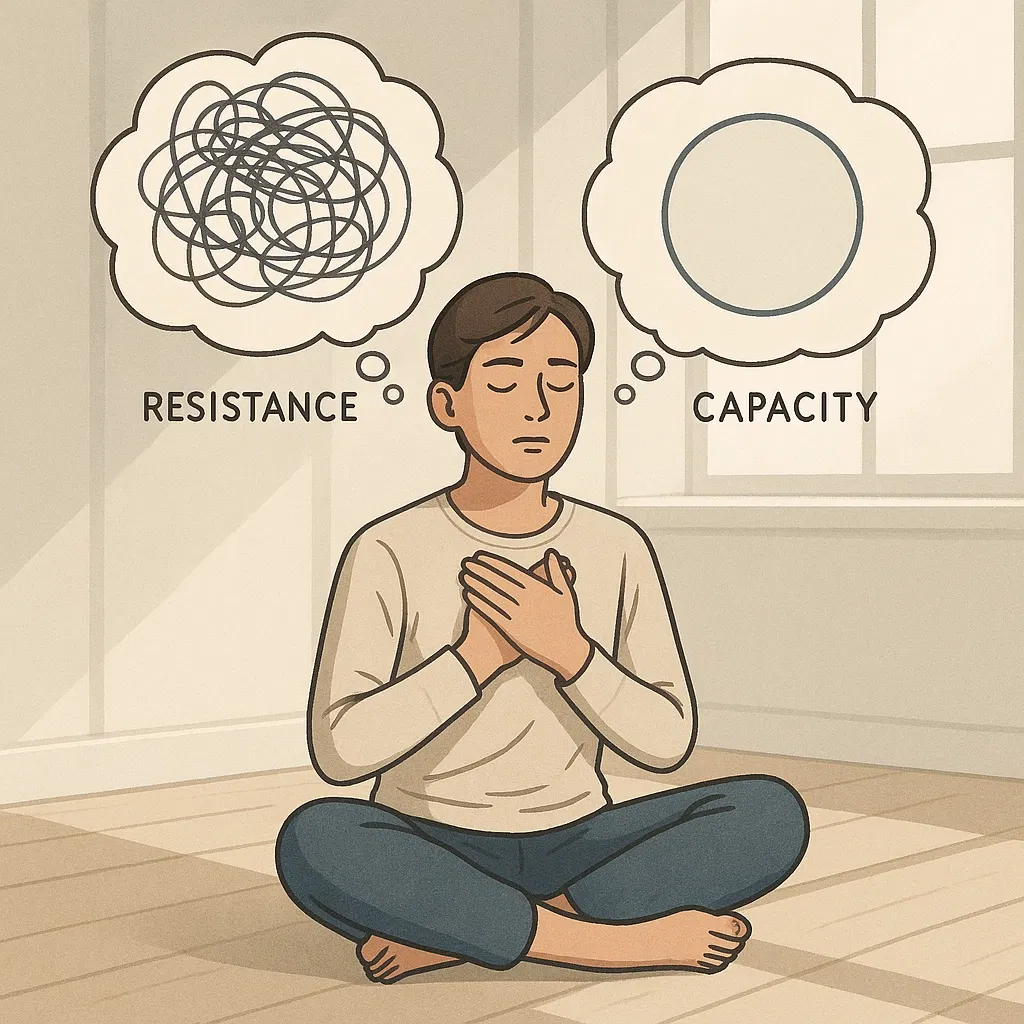
When you try to "feel better," you are resisting the current moment. You are telling your nervous system that what is happening right now is unacceptable. This creates a "comfort addiction cycle" where you become a slave to your external environment. You can only be happy if your kids are quiet and your spouse is in a good mood.
When you get better at feeling, you expand your capacity. You become a bigger container. Suddenly, a toddler’s tantrum isn’t a threat to your peace: it’s just energy moving through the room. When you have the capacity to sit with the "suck" without needing to change it, you become the anchor that everyone else can tie their boat to.
How to Be a Better Parent Without Saying a Word
Parenting isn't about the words you say; it's about the state you're in.
We’ve all been there: Your kid is losing it over a broken cracker. You’re tired, you’re stressed, and you start yelling at them to "calm down!" The irony is palpable. You are asking a child with an underdeveloped brain to do something you: the adult: can’t even do in that moment.
When you are dysregulated, your child’s nervous system picks up on your "threat" signals. Their survival brain goes into high alert. Now you have two people in "fight or flight" mode, and nobody is actually home in their logical brain.
If you want to be a better parent, your only job in that moment is to regulate yourself first.
When you stay grounded, when your breathing stays deep, and your heart stays open, you provide the "safety cues" your child needs to come back down. This is the ultimate parenting hack. By being a regulated presence, you are literally teaching your child’s brain how to handle stress. You aren't just fixing a behavior; you are building a resilient human being.
Learn more about our approach to mindful parenting here.
Relationship Alignment: The End of the Tug-of-War
The same principle applies to your romantic life. Most relationship conflict is just two dysregulated nervous systems triggering each other.
Maybe your partner says something in a certain tone, and suddenly you’re defensive. Your heart starts racing, your jaw clenches, and you’re ready for a fight. In that moment, you aren't seeing your partner; you’re seeing an "enemy."

True relationship alignment happens when both partners take responsibility for their own internal state. When you stop blaming your partner for how you feel and start looking at the survival patterns running in your own body, the game changes.
When one person in a relationship learns to stay regulated during a conflict, it creates a "ripple effect." It makes it nearly impossible for the other person to stay in a "fight" state for long. You are literally inviting them back into safety through your own presence.
The Ripple Effect of Your Presence
Your nervous system doesn't just affect your house: it affects your business, your team, and your community.

Think of yourself as a stone thrown into a pond. The "vibes" you carry: the state of your nervous system: are the ripples. If you are constantly in a state of "hustle, grind, and stress," you are sending out ripples of dysregulation. You’ll find that your employees are more anxious, your deals are harder to close, and your home life feels chaotic.
But when you cultivate a regulated, ventral vagal state, your ripples are peaceful. You become the person people want to be around because their nervous systems feel safe in your presence. That is true leadership.
How to Start Co-regulating Today
So, how do you actually do this? It starts with you. You cannot give what you do not have. If your internal "battery" is dead, you can’t jump-start anyone else.
- Notice the Activation: The first step is awareness. When you feel that tightening in your chest or that urge to yell, stop. Recognize that your survival patterns are taking the wheel.
- Practice the 10-Minute Reset: We created the Nervous System Reset Protocol specifically for this. It’s a daily practice that expands your capacity so you don’t get triggered as easily.
- Hold the Space: When your child or partner is upset, don't rush to fix it. Just be there. Let them feel what they are feeling while you stay grounded.
- Identify Your Patterns: We all have "survival patterns": ingrained ways of reacting to stress. Some of us shut down, some of us lash out, some of us try to please everyone.
If you want to know what patterns are currently running your life (and your relationships), grab our free guide:
DOWNLOAD: The Free Survival Patterns Guide
Your New Path to Peace
The world tells you that you need to "do" more to be happy. We're telling you that you need to "be" more.
When you shift your focus from changing your external circumstances to regulating your internal state, the world starts to look very different. You stop reacting to life and start responding to it. You become the source of peace in your home, rather than another source of chaos.

This isn't about being perfect. It's about being present. It’s about getting better at feeling the hard stuff so you can finally enjoy the good stuff.
If you’re ready to stop the cycle of stress and start living from a place of deep alignment, let’s talk. Our team is here to help you navigate this journey and reclaim your peace.
Book a call with our team here to see how we can help you master your nervous system.
It’s time to stop trying to feel better and finally get better at feeling. Your family, your partner, and your future self will thank you.