The New Frontier: Where Neuroscience Meets Technology
Remember when "personal transformation" meant reading a self-help book and trying to think more positively? Those days feel increasingly quaint as we navigate 2025's landscape of neuroscience-informed AI tools that are revolutionizing how we understand and upgrade our internal operating systems.
At Satori Prime, we've long known that true transformation happens not just in the mind, but in the body—specifically, in the nervous system. What's exciting is that technology has finally caught up to this understanding, creating a perfect storm of innovation that's making personal evolution more accessible, measurable, and profound than ever before.
Why Your Nervous System Is the Gateway to Transformation
Before diving into the tech, let's get clear on why the nervous system matters so much. Your nervous system isn't just a collection of nerves—it's your body's primary information highway, constantly processing internal and external data to determine whether you're safe or in danger.
When chronically dysregulated (which describes many of us in today's high-stress world), your nervous system keeps you stuck in survival patterns:
- Fight responses: Irritability, anger, frustration
- Flight responses: Anxiety, worry, overthinking, avoidance
- Freeze responses: Depression, disconnection, procrastination
- Fawn responses: People-pleasing, losing your authentic voice
No amount of positive thinking or intellectual insight can override these physiological patterns. This is why many traditional approaches to personal development hit a ceiling—they're trying to solve a body problem with mind-only solutions.

The AI Revolution in Nervous System Regulation
Here's where 2025's technology landscape gets fascinating. AI-powered tools are now capable of:
1. Real-Time Nervous System Monitoring
Wearable technology has evolved dramatically. Today's biosensors can track:
- Heart rate variability (HRV)
- Respiratory patterns
- Galvanic skin response
- Muscle tension
- Neural activity patterns
These metrics provide a comprehensive picture of your nervous system state at any given moment. But the breakthrough isn't just in measuring—it's what happens next.
2. Personalized Regulation Protocols
AI algorithms analyze your unique nervous system patterns and create customized regulation protocols. Unlike the one-size-fits-all approaches of the past, these systems recognize that:
- Your triggers are unique
- Your dysregulation patterns are unique
- Your optimal regulation pathways are unique
For example, Sarah, a high-achieving executive who worked with us at Satori Prime, discovered through AI-assisted nervous system mapping that her system responded best to specific breathwork patterns followed by cold exposure—a protocol entirely different from her colleague who benefited most from movement followed by guided meditation.
3. Learning Acceleration Through Biofeedback
Perhaps most revolutionary is how these technologies accelerate learning. When you can see your nervous system responding in real-time, you develop what neuroscientists call "interoceptive awareness"—the ability to sense and influence your internal state.
"We're seeing people develop in months what used to take years of dedicated practice," explains Dr. Eliza Montgomery, neuroscientist and developer of the NeuroPace AI system. "It's like having training wheels that eventually come off, leaving you with upgraded internal capabilities."
The Convergence: AI-Enhanced Coaching at Satori Prime
At Satori Prime, we've integrated these technological advances into our coaching methodology. Here's what this looks like in practice:
Phase 1: Mapping Your Nervous System
Using advanced biosensors and AI analysis, we create a comprehensive map of your nervous system tendencies:
- When and how you dysregulate
- Your natural regulation strategies (effective and ineffective)
- Your autonomic flexibility (how quickly you recover from stress)
- Your trigger patterns and thresholds
Phase 2: Targeted Intervention Design
Based on your nervous system map, AI helps design a personalized intervention strategy that includes:
- Regulation practices matched to your nervous system type
- Environmental modifications to support regulation
- Relationship dynamics that either support or challenge your system
- Progressive challenges to build your regulation capacity
Phase 3: Real-Time Coaching Enhancement
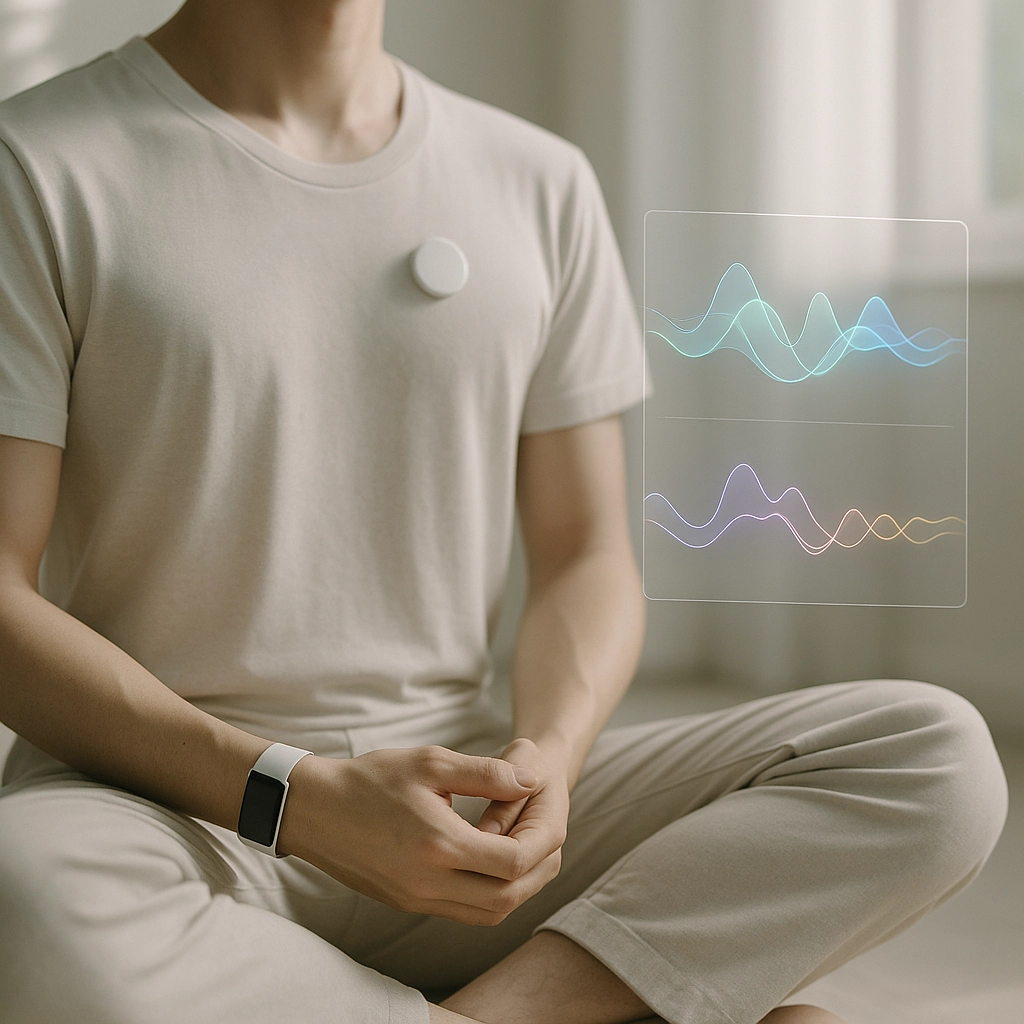
During coaching sessions, AI-assisted monitoring provides both coach and client with valuable insights:
- Moment-by-moment nervous system responses
- Recognition of subtle dysregulation before it escalates
- Identification of which interventions create the most meaningful shifts
- Progress tracking across multiple dimensions
"It's like having X-ray vision into patterns I couldn't see before," reports Michael, a client who struggled with chronic stress for decades. "I'm not just feeling better—I understand the mechanics of my own system in a way that gives me confidence I can maintain these changes."
The Science Behind the Revolution
This isn't science fiction—it's built on solid research breakthroughs:
NeuroAI Integration
The field of NeuroAI has exploded in recent years, with algorithms now capable of interpreting neural patterns with unprecedented accuracy. Technologies like Georgia Tech's TopoNets have created AI systems that mirror the brain's structural organization, making them more efficient at recognizing human biological patterns.
Polyvagal Theory Applications
Dr. Stephen Porges' Polyvagal Theory—which explains how our autonomic nervous system influences our behavior—has been incorporated into AI systems that can identify subtle shifts between sympathetic (fight/flight) and parasympathetic (rest/digest) states.
Predictive Processing Models
Advanced AI now employs predictive processing models that anticipate nervous system responses before they fully manifest, allowing for preemptive regulation guidance rather than reactive interventions.
Beyond Individual Transformation: Collective Implications
The implications extend beyond individual coaching. These technologies are creating new possibilities for:
Group Synchronization
In group coaching environments, AI can now track nervous system synchronization between participants, providing insights into group dynamics and collective regulation.
Relationship Optimization
Couples and families are using shared nervous system monitoring to better understand interaction patterns and develop co-regulation strategies.
Organizational Wellbeing
Forward-thinking companies are implementing these technologies to create work environments that support regulated nervous systems, resulting in higher creativity, better decision-making, and reduced burnout.

The Future Is Now: From Insight to Integration
What makes 2025 different from previous years isn't just the existence of these technologies—it's their accessibility and integration into comprehensive transformation systems.
At Satori Prime, we've moved beyond the "wow factor" of these innovations to focus on what matters most: how they support lasting change and authentic living.
As our founder likes to say, "Technology should amplify humanity, not replace it." The AI and nervous system monitoring tools we employ are designed to deepen your connection to yourself, not outsource your awareness to machines.
Your Next Steps
If you're intrigued by how these technologies might support your own transformation journey:
- Start with awareness: Even without advanced technology, you can begin tuning into your nervous system's signals
- Explore basic biofeedback: Apps like HeartMath and Muse provide accessible entry points to nervous system awareness
- Consider working with professionals: Coaches trained in nervous system regulation can help you navigate this territory more effectively
- Stay curious: This field is evolving rapidly, with new applications emerging monthly
The integration of nervous system science and AI isn't just another tech trend—it represents a fundamental shift in how we approach personal transformation. By working with your biology rather than against it, and using technology to amplify rather than bypass your innate wisdom, you unlock new possibilities for living with greater presence, purpose, and peace.
As we often remind our clients at Satori Prime: Don't just chase feeling better—get better at feeling. Now, technology is making that journey more accessible than ever before.