Let’s get real for a second: you’ve spent thousands of dollars on workshops, read every book on trauma, and you’re probably "meditating" until your legs go numb. Yet, you still feel like a live wire: anxious, reactive, or completely checked out. You’re doing the work, but the dial isn’t moving.
Why?
Because most of the personal development world has lied to you. They’ve sold you on the idea that "regulation" is a destination: a state of perpetual Zen where nothing bothers you. They’ve told you to "think positive" or "just breathe" when your body feels like it’s literally on fire.
At Satori Prime, we operate on a different frequency. Our core philosophy is simple but radical: "Stop trying to make yourself feel better and simply get better at feeling."™
If you’re still stuck in the same cycles of burnout and overwhelm, you’re likely falling into these seven common traps. Let’s dismantle them so you can actually start living.
1. The Intellectual Trap: Trying to "Think" Your Way Out
This is the biggest mistake high-achievers make. You try to use your prefrontal cortex (the "thinking" brain) to talk your lizard brain (the nervous system) out of a survival state.
Here’s the truth: when your nervous system perceives a threat: whether it’s a demanding boss or a crying toddler: your rational brain goes offline. You can repeat affirmations until you’re blue in the face, but if your body feels unsafe, those words are just static. This is "top-down" processing, and it’s a losing battle when you're dysregulated.
True healing requires a "bottom-up" approach. You have to speak the language of the body: sensations, breath, and movement: to signal to your brain that the coast is clear.
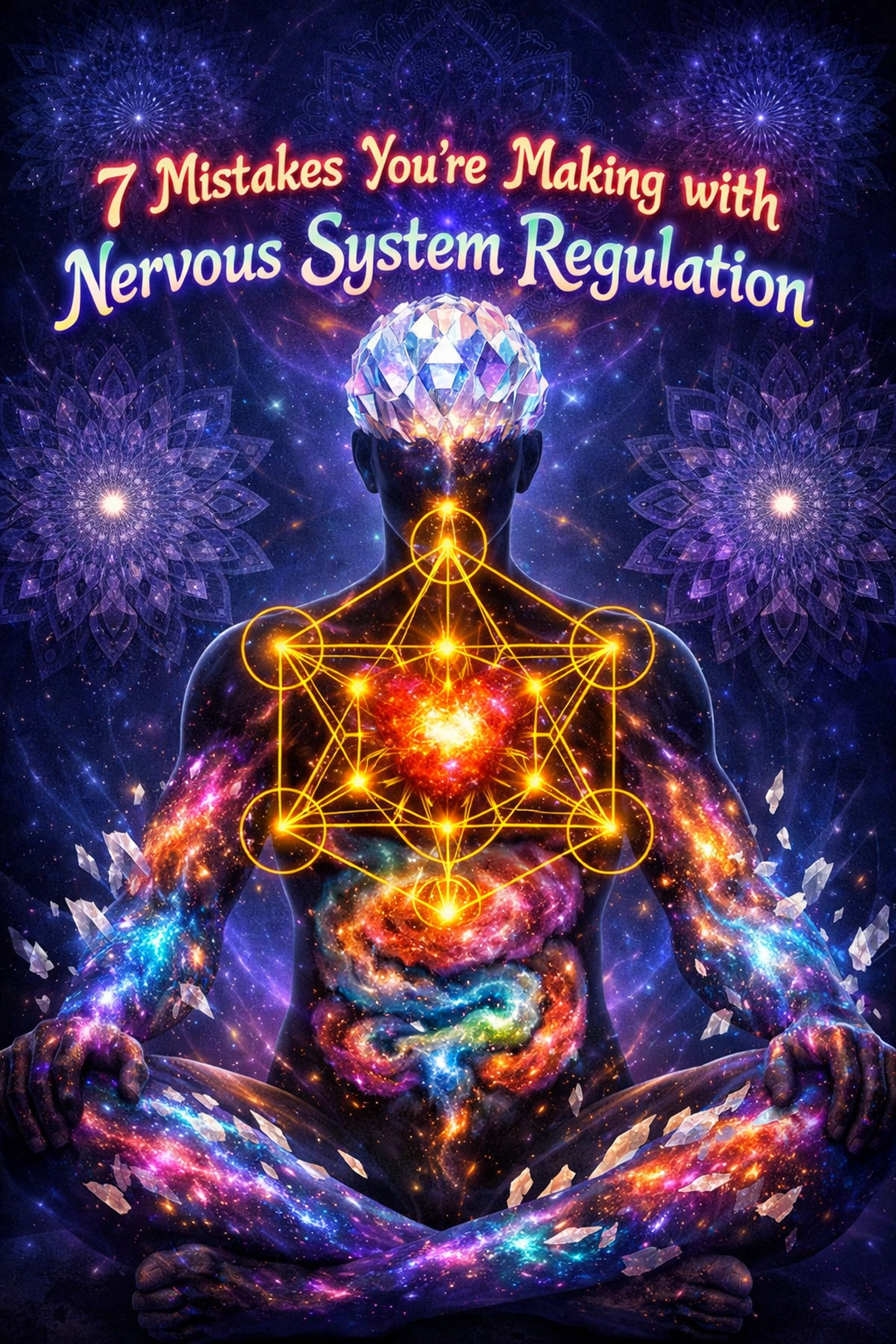
(Visionary image: A human silhouette filled with swirling, electric nebulae, with a glowing path moving from the gut up to a crystalline brain architecture.)
2. The Firefighter Mentality: Only Regulating in Crisis
Most people treat nervous system regulation like a fire extinguisher. You only reach for it when the building is already engulfed in flames: during a panic attack, a heated argument, or a massive depressive dip.
This is like trying to learn how to swim while you’re drowning in the middle of the ocean. It doesn't work.
The real magic happens in the "boring" moments. Your power lies in your ability to practice the pause when you’re not in crisis. By regulating during calm times, you build the "vagal tone" and capacity needed to handle the big waves when they eventually hit. If you aren't training during the peace, you’ll never survive the war.
3. Fearing the "Thaw": Giving Up When Symptoms Flare
When you start doing deep nervous system work, things often get worse before they get better. This is what we call "the thaw."
If you’ve been stuck in a state of "Freeze" (numbness, dissociation, lack of motivation) for years, you can’t jump straight to "Safe and Social." You have to move through "Fight or Flight" first. This means as you start to regulate, you might suddenly feel more anxious, more angry, or more overwhelmed.
Most people see this as a sign that the work isn't working. They quit. In reality, it’s a sign that your system is finally coming back to life. You’re not failing; you’re defrosting. Stay with the sensation. Get better at feeling it.
4. The Perfectionist’s Delusion: Thinking Regulation = Calm
If your goal is to be "calm" 24/7, you’ve already lost. That’s not regulation; that’s a lobotomy.
A healthy nervous system is a flexible one. It’s meant to get angry when you see injustice. It’s meant to feel fear when you’re in danger. It’s meant to feel grief when you lose something you love.
Regulation isn't the absence of "negative" emotions. It’s the ability to move into those states, experience them fully, and then return to baseline without getting stuck there for three weeks. If you’re trying to suppress your humanity in the name of "spirituality," you’re just creating more internal pressure.
(Visionary image: A vibrant, multi-colored wave moving through a cosmic landscape, showing peaks of fire and valleys of deep water, all contained within a golden geometric frame.)
5. The "One and Done" Syndrome: Lack of Consistency
Neuroplasticity: the literal rewiring of your brain: doesn't happen during a weekend retreat. It happens in the microscopic choices you make every single day.
You can’t go to the gym once and expect a six-pack, yet people expect their nervous system to transform after one breathwork session. This is a long game. It requires small, consistent hits of safety throughout your day.
Whether it's a 30-second cold plunge, a minute of box breathing, or simply noticing the weight of your feet on the floor, these micro-moments are what build a new energetic blueprint for your life. You can explore more of these practices on our podcast.
6. The Fawning Trap: People-Pleasing as Regulation
Did you know that people-pleasing is actually a survival state? It’s called "Fawning."
If you are constantly scanning other people's faces to see if they’re happy so you can feel okay, you aren't regulated. You’ve outsourced your safety to the external world. You are giving away "70% of your internal resources" to manage someone else’s experience.
You cannot heal your nervous system while you are still addicted to being liked. True regulation requires the courage to be misunderstood. It requires you to prioritize your internal state over the comfort of those around you. Until you stop fawning, your system will always remain in a state of hyper-vigilance.
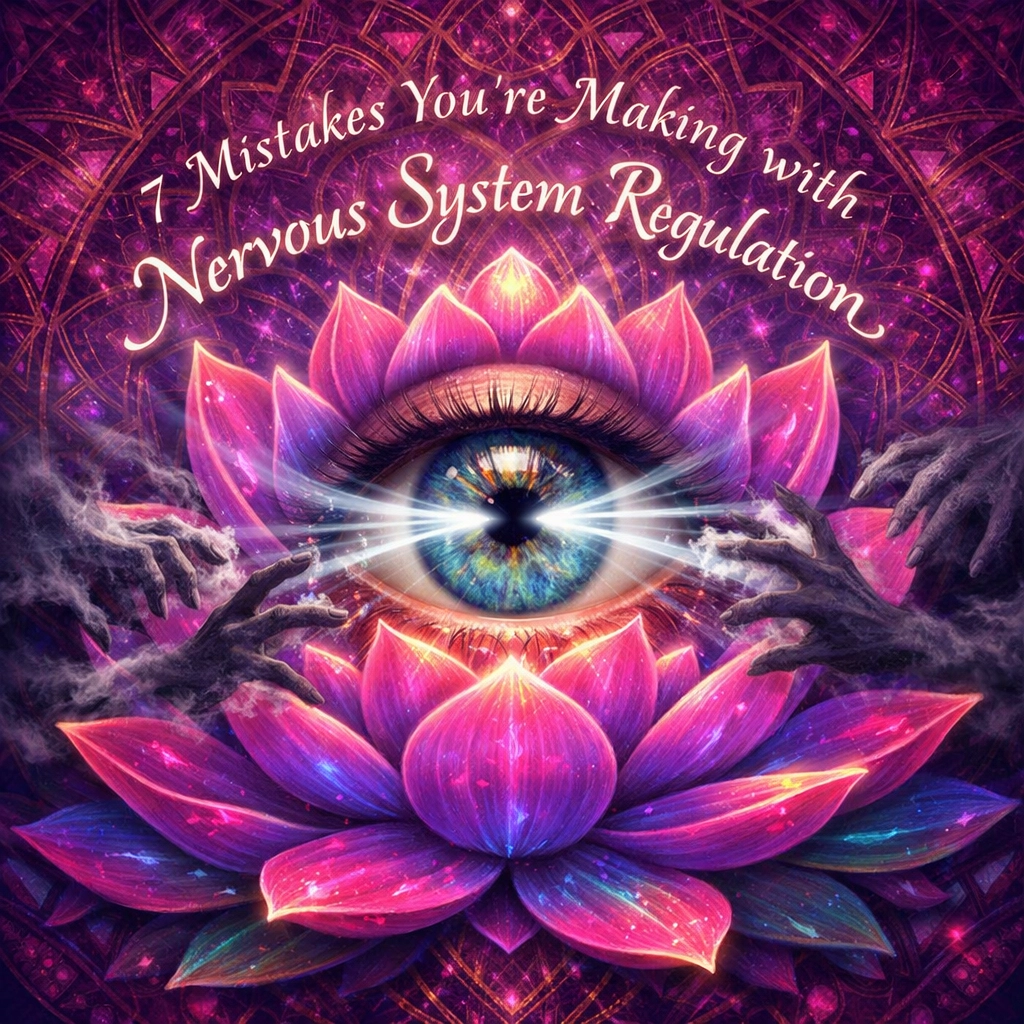
(Visionary image: An eye at the center of a lotus, radiating beams of light that dissolve shadowy, grasping hands representing external expectations.)
7. Misunderstanding the "Pause"
Most people live in a state of "Stimulus-Response."
- Stimulus: My partner said something annoying.
- Response: I snap back.
There is no space in between. Regulation is the art of widening the gap between the stimulus and your response. It’s that split second where you notice the heat rising in your chest and you choose how to respond rather than reacting from your childhood wounds.
If you aren't practicing the pause, you’re just a sophisticated biological machine running old software. To upgrade your life, you have to find the gap.
How to Actually Get Unstuck
So, how do we move past these mistakes? We stop looking for the "fix."
The obsession with "healing" often becomes another way to reject ourselves. We think, "Once I'm regulated, then I'll be worthy of the life I want."
No. You are worthy now. The work is simply about expanding your capacity to hold the fullness of the human experience: the light and the dark, the joy and the visceral pain.
At Satori Prime, we guide high-performers, parents, and seekers through the process of LaunchYou, where we strip away the stories and get down to the somatic truth of who you are. We don't want you to be a "calmer" version of your old self. We want you to be a fully expressed, visionary version of your true self.
If you’re tired of the "mental gymnastics" and ready to actually change your internal architecture, it’s time to stop thinking and start feeling.
(Visionary image: A bridge made of light connecting a dense, shadowy forest to an expansive, crystalline city in the clouds, symbolizing the journey from survival to thriving.)
Your Next Step
Are you ready to stop making these mistakes and start mastering your internal world?
- Audit your day: Where are you "thinking" your way out of feelings?
- Find the gap: Practice the 5-second pause before you react today.
- Get Support: You don't have to do this alone. Our team is here to help you navigate the "thaw" and build a nervous system that supports your highest vision.
Book Your Call with us today and let’s see what’s actually keeping you stuck. It’s time to stop "trying" to be better and start being the person you were meant to be.
Remember: The goal isn't to be "fixed." The goal is to be alive.
Want more insights into the intersection of personal development and nervous system science? Check out our full blog or browse our testimonials to see how this work changes lives.