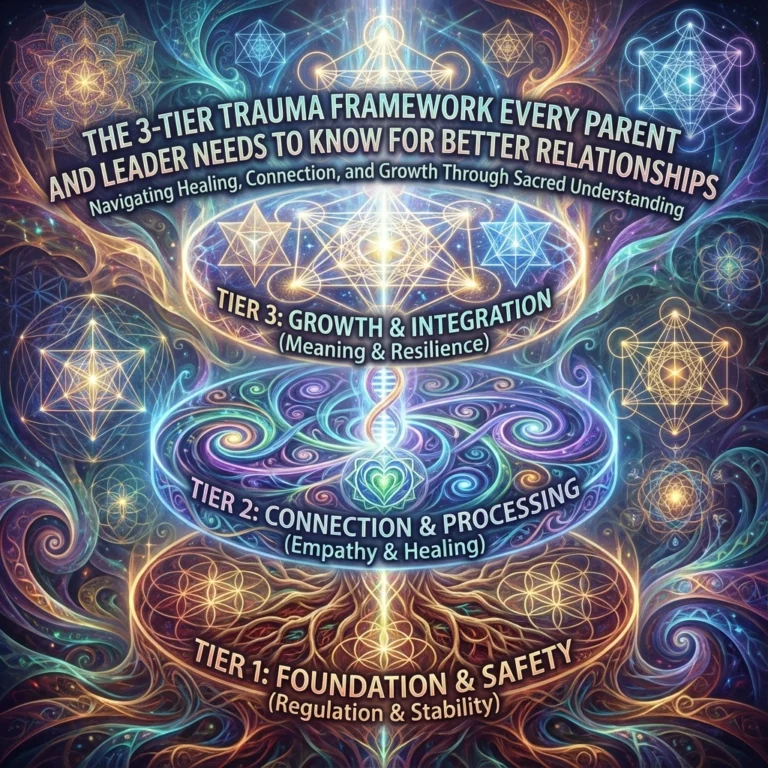
What if I told you that the key to improving relationships, becoming a better parent, and achieving high performance in leadership isn't another communication technique or management strategy? What if the real breakthrough lies in understanding how trauma shapes our nervous system health and learning to work with it rather than against it?
Here's the truth: Whether you're a parent dealing with a triggered teenager or a leader managing a stressed team, you're not just dealing with behavior: you're dealing with nervous systems that have learned to protect themselves in ways that often sabotage the very connections we're trying to build.
The 3-Tier Trauma Framework isn't just another personal development tool. It's a revolutionary approach that combines cutting-edge neuroscience with practical wisdom to help you create environments where healing happens naturally and relationships thrive.
Why Traditional Approaches Fall Short
Most parenting advice and leadership training focuses on external behaviors: what to say, how to set boundaries, which rewards and consequences to use. But trauma lives in the nervous system regulation center of our brains, not in our logical thinking minds.
When someone has experienced trauma (and let's be honest, who hasn't in some form?), their system is constantly scanning for threat. That anxious child isn't being defiant: their nervous system is stuck in survival mode. That difficult team member isn't trying to sabotage the project: they're operating from a place of perceived danger.
This is where the magic of co-regulation comes in. Before we can help others quiet the mind or access flow states, we need to understand how our own nervous system affects theirs.
The 3-Tier Trauma Framework Explained
This framework operates on three interconnected levels, each building upon the last to create sustainable healing and transformation:
Tier 1: Safety & Stabilization
Tier 2: Connection & Co-Regulation
Tier 3: Integration & Transformation
Think of it like building a house. You can't start with the roof (Tier 3 transformation) without a solid foundation (Tier 1 safety). Each tier supports the next, creating a comprehensive approach to nervous system health and spiritual development.
Tier 1: Safety & Stabilization – The Foundation
The first tier is all about creating physical and emotional safety. This isn't just about removing obvious dangers: it's about creating an environment where nervous systems can begin to relax and trust.
For Parents:
- Predictable routines that help your child's nervous system know what to expect
- Emotional regulation modeling: when you stay calm, you're literally teaching their nervous system how to be more peaceful
- Creating spaces where feelings can be expressed without judgment or immediate "fixing"
For Leaders:
- Psychological safety in meetings where people can speak without fear of ridicule or punishment
- Clear expectations and consistent follow-through that builds trust
- Acknowledging your own stress and modeling healthy responses
The goal here isn't perfection: it's presence. When we can stay regulated ourselves, we become what neuroscientists call a "secure base" for others to attach to.

The Nervous System Science
Here's what's happening underneath: When someone feels safe, their parasympathetic nervous system (the "rest and digest" response) comes online. This is when healing actually happens. The body starts producing different chemicals, stress hormones decrease, and the prefrontal cortex: our thinking brain: can function properly.
This is why traditional discipline often backfires with traumatized children, and why authoritarian leadership creates more stress than productivity. You can't think your way out of a nervous system response.
Tier 2: Connection & Co-Regulation – The Bridge
Once basic safety is established, we can begin the deeper work of connection. This tier is where the real transformation happens through relationship.
The Power of Attunement
Co-regulation happens when one regulated nervous system helps calm an dysregulated one. Think of it like tuning forks: when you strike a calm, grounded tuning fork near an agitated one, the agitated one gradually begins to match the calm frequency.
For Parents:
- Mindful presence during difficult moments instead of immediately jumping to solutions
- Validation of their experience: "I can see you're really upset" before moving to problem-solving
- Using your own meditation practice and nervous system regulation techniques to stay grounded when they're triggered
For Leaders:
- Active listening without immediately jumping to judgment or solutions
- Emotional acknowledgment in team dynamics: naming what you notice without making it wrong
- Creating rituals and practices that support team nervous system health
Moving Beyond Behavioral Management
This tier moves us away from trying to control behavior and toward understanding the nervous system patterns underneath. When someone feels truly seen and understood, their defensive patterns naturally begin to soften.
This is where many parents and leaders get stuck. They try to skip this tier and go straight to changing behavior or achieving outcomes. But connection can't be rushed, and co-regulation can't be faked.
Tier 3: Integration & Transformation – The Evolution
The third tier is where lasting change happens. Once safety is established and connection is strong, people can begin to develop their own self improvement skills and access higher states of consciousness.
Developing Internal Resources
This is where we teach the skills for how to heal myself:
- Meditation for healing practices that specifically target trauma patterns
- Nervous system regulation techniques they can use independently
- Tools for accessing flow states and high performance
For Parents:
- Teaching children to recognize their own emotional states and body sensations
- Introducing age-appropriate meditation and breathing techniques
- Helping them develop their own spiritual development practices
For Leaders:
- Creating life coaching opportunities within your organization
- Supporting team members' personal development journeys
- Modeling your own commitment to growth and healing
The Ripple Effect
Here's where it gets really exciting: When people heal their own trauma patterns and develop strong nervous system regulation skills, they become agents of healing for others. That child who learns to self-regulate becomes a calming presence for their siblings. That team member who does their own healing work naturally supports their colleagues' growth.
Practical Implementation: Where to Start
Week 1-2: Focus on Tier 1
Start with your own nervous system regulation. You can't give what you don't have. Develop a daily practice: even 10 minutes of meditation or breathing exercises: that helps you stay grounded.
Week 3-4: Build Tier 2 Skills
Practice co-regulation in your relationships. Instead of trying to fix or change others, focus on staying present and attuned. Notice how your calm presence affects others.
Month 2+: Introduce Tier 3 Elements
Once you've established safety and connection, you can begin introducing growth-oriented practices and conversations.
The Transformation is Inevitable
Here's what I've observed working with hundreds of families and organizations: When you consistently apply this framework, transformation becomes inevitable. Not because you're forcing change, but because you're creating the conditions where natural healing can occur.
Children who felt unsafe begin to trust. Team members who were defensive become collaborative. Relationships that felt stuck start flowing again.
The 3-Tier Trauma Framework isn't just about healing the past: it's about creating a future where our relationships become sources of strength, growth, and joy. It's about raising children and leading teams from a place of wisdom rather than reactivity.
And perhaps most importantly, it's about recognizing that every challenging moment is actually an opportunity for deeper connection and healing. When we understand trauma not as something to fix but as information about what someone needs to feel safe, everything changes.
The question isn't whether this works: neuroscience has already proven it does. The question is: Are you ready to become the kind of parent or leader who creates healing wherever you go?