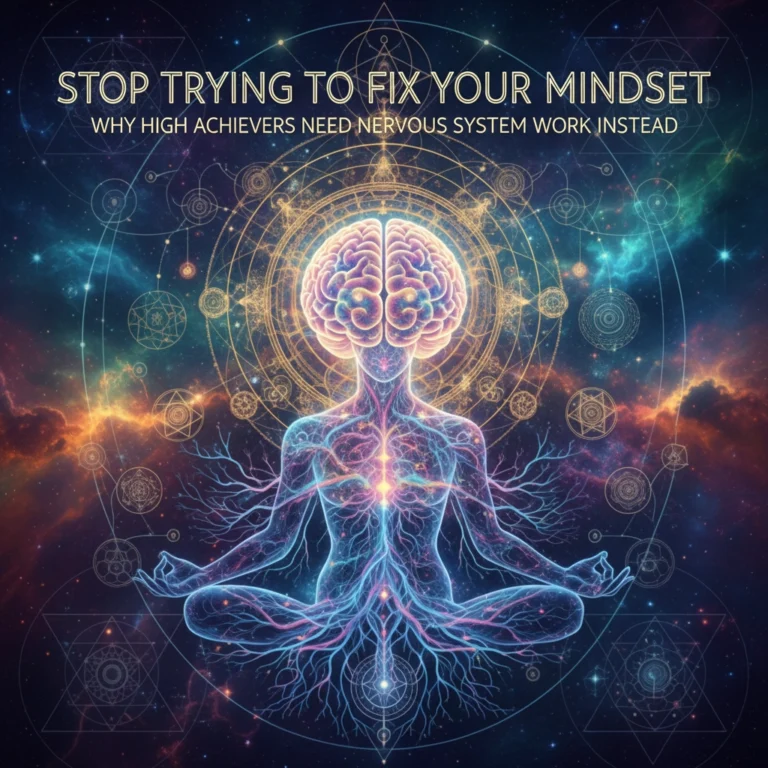
You've read every self-help book. You've mastered visualization. You can reframe negative thoughts like a pro. Yet somehow, you're still running on empty, constantly activated, and wondering why your perfectly crafted mindset isn't translating into the peace and sustainable success you're after.
Here's the truth bomb: your nervous system doesn't care about your affirmations.
While you're up in your head trying to think your way to better feelings, your body is operating on a completely different timeline. Your nervous system reacts to stress in milliseconds, while your conscious thoughts take much longer to kick in. By the time you're trying to reframe a situation, your system has already flooded with stress hormones and shifted into survival mode.
This is why mindset work alone feels like you're constantly swimming upstream.
The Missing Piece in Personal Development
Most high achievers approach stress like it's a mental game. Feel anxious? Think positive thoughts. Overwhelmed? Just prioritize better. Burned out? Must need better time management.
But here's what's actually happening: when your nervous system is dysregulated, no amount of cognitive reframing will bring you back to balance because your body is literally operating in fight-or-flight mode. You're essentially trying to have a rational conversation with your amygdala while it's screaming "DANGER!"

The fundamental problem with mindset-only approaches is that they're top-down solutions to a bottom-up problem. Stress isn't just happening in your head, it's a full-body experience that requires body-based interventions.
Think about it this way: if your house is on fire, you don't stand outside and visualize the flames going away. You grab a hose. Same principle applies to your nervous system.
What Nervous System Work Actually Is
Nervous system regulation isn't some woo-woo concept. It's about understanding that your autonomic nervous system has two main branches:
- Sympathetic nervous system (your gas pedal): Activates your stress response
- Parasympathetic nervous system (your brake pedal): Helps you rest and recover
Most high performers are stuck with their foot permanently on the gas pedal, wondering why they feel fried despite having their mindset dialed in.
Nervous system work focuses on:
Capacity over content. Instead of changing what you think about, you're expanding how much you can actually handle before your system tips into overwhelm.
Bottom-up regulation. You're working from body to brain, using somatic tools like breathwork, movement, and nervous system resets to change your physiological state first.
Flexibility training. Teaching your nervous system to rev up when needed, then return to calm, instead of staying stuck in perpetual activation.
Why High Achievers Are Particularly Vulnerable
The very traits that make you successful, relentless drive, always being "on," constant pushing, keep your nervous system locked in chronic stress mode. This creates a painful paradox: you mistake constant activation for productivity.
Here are the telltale signs your nervous system is running the show:
- You feel restless when you're not "doing" something
- You have trouble winding down even when you want to
- You find yourself people-pleasing despite knowing better
- Your body feels tense even during "relaxation"
- You get irritated by small things that shouldn't matter
- You push through exhaustion instead of honoring your limits
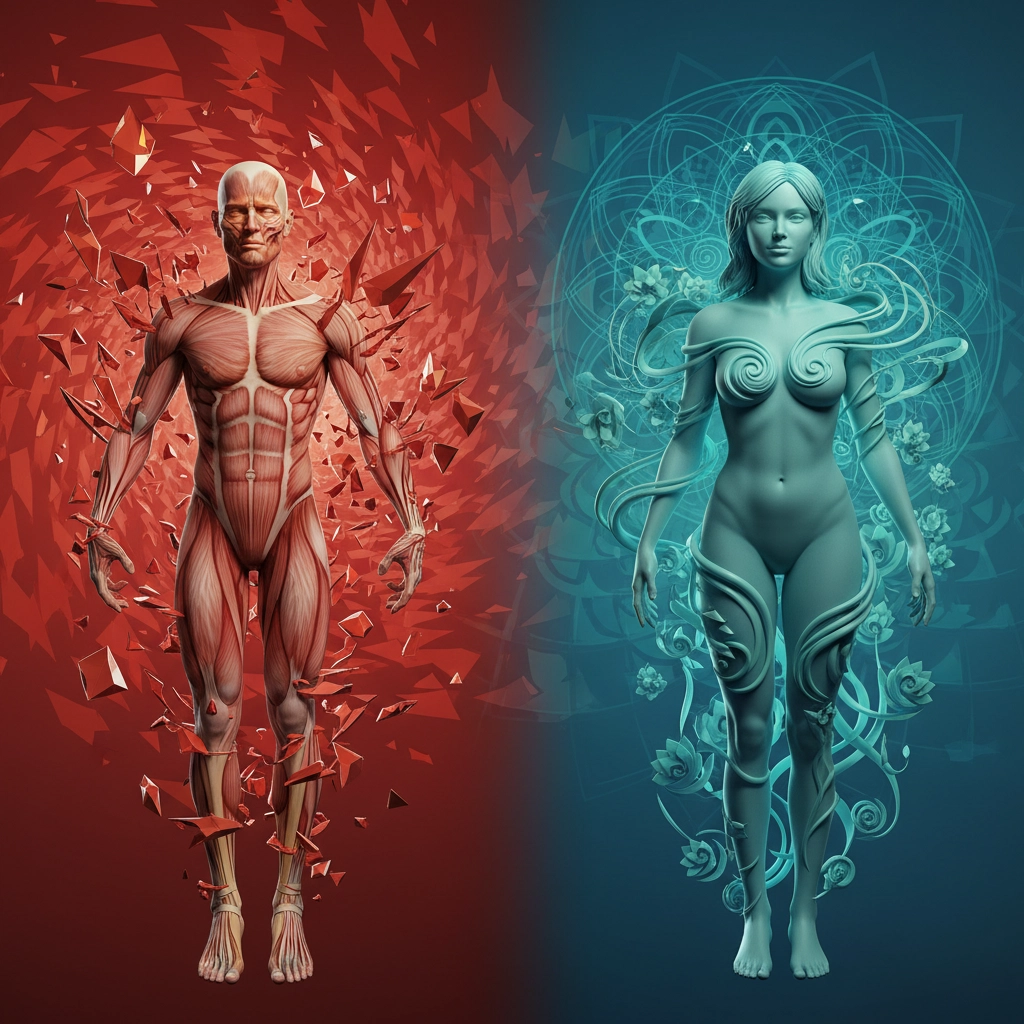
Chronic stress literally impairs your nervous system's flexibility. Without this flexibility, you stay stuck in hustle mode, constantly driven by an underlying sense of urgency that has nothing to do with actual deadlines.
There's also a trap specific to high achievers: you approach nervous system regulation the same way you approach business problems. You try breathwork once and wonder why you still feel stressed. You meditate twice and get frustrated it didn't "work."
But nervous system regulation isn't a quick fix, it's daily maintenance, like brushing your teeth.
The Integration Game-Changer
Here's what the most successful high performers are doing in 2025: they're not choosing between mindset and nervous system work. They're starting with nervous system regulation as the foundation, then building mindset work on top of it.
This integration approach is what makes everything else actually work.
Before a big presentation:
- Old approach: Visualize success, repeat affirmations
- New approach: Regulate your nervous system first through breathwork, then align your mindset
During stressful negotiations:
- Old approach: Override stress signals with mental toughness
- New approach: Use stress as information while maintaining regulation
When facing setbacks:
- Old approach: Reframe the situation and push forward
- New approach: Let your nervous system process first, then engage strategic thinking from a regulated state

When your nervous system is regulated, your mindset tools actually become more powerful. Visualization becomes more vivid because you're not fighting internal resistance. Goal-setting becomes more intuitive because you can feel what truly aligns versus what you think you "should" want.
Most importantly, positive thinking becomes authentic rather than forced because it's arising from a genuinely resourced state.
Practical Nervous System Regulation for High Performers
The good news? You don't need to spend hours meditating or completely overhaul your life. Here are some nervous system regulation practices that actually work for busy, driven people:
The 4-7-8 Reset: Breathe in for 4, hold for 7, exhale for 8. This activates your parasympathetic nervous system in under a minute.
Movement breaks: Instead of pushing through fatigue, take 2-minute movement breaks. Shake your hands, roll your shoulders, or do jumping jacks. Movement helps metabolize stress hormones.
Co-regulation: Spend time with people who have regulated nervous systems. Your system literally syncs up with others through mirror neurons.
Boundaries as nervous system protection: Every "yes" when you mean "no" dysregulates your system. Boundaries aren't selfish: they're nervous system hygiene.
Temperature regulation: Cold exposure (cold showers, ice baths) and heat therapy (saunas, hot baths) train your nervous system flexibility.
The key is consistency over intensity. Five minutes of breathwork daily beats an hour-long session once a week.
The Ripple Effects of Getting This Right
When high performers prioritize nervous system regulation, the changes extend far beyond just feeling better:
Decision-making improves because you're no longer operating from survival mode. You can access creative problem-solving instead of just reactive thinking.
Leadership becomes more magnetic because people trust regulated nervous systems. When you're calm and grounded, others naturally want to follow you.
Relationships deepen because you can actually be present instead of always scanning for the next problem to solve.
Performance increases because you're working from sustainable energy rather than borrowed energy from your stress response.
The Bottom Line
You cannot think your way out of a dysregulated nervous system. The stress response lives in your body, operates below conscious awareness, and requires body-based interventions to restore balance.
For high performers accustomed to solving every problem through strategic thinking, this represents a fundamental upgrade: moving from trying to control stress cognitively to learning how to regulate it physiologically.
Your mindset work isn't wrong: it's just incomplete without the foundation of nervous system regulation. When you get both pieces working together, that's when the magic happens. You maintain your drive and ambition while finally feeling calm and grounded in your own body.
The most successful people aren't the ones who can think their way out of every problem. They're the ones who can stay regulated under pressure, make clear decisions from a grounded state, and sustain high performance without burning out.
Start with your nervous system. Everything else becomes easier from there.