The Endless Loop of Seeking Relief
We've all been there. Life throws a curveball, emotions surge, and our first instinct is to make the discomfort disappear. Maybe it's reaching for the phone to distract yourself, having that extra glass of wine, or diving into work to avoid feeling altogether. This habit of escaping uncomfortable emotions has become so normalized that entire industries profit from our desire to "feel better."
But what if this approach is precisely what keeps us stuck?
At Satori Prime, we've observed a peculiar pattern across thousands of clients: the more desperately someone tries to feel better, the more elusive lasting change becomes. This isn't coincidental—it's a fundamental misunderstanding of how emotional transformation actually works.
The Paradox: Why "Feeling Better" Keeps You Trapped
Think about the last time you felt anxious. What was your response? If you're like most people, you immediately tried to eliminate the anxiety—through rationalization, distraction, or some form of self-soothing. While this might provide temporary relief, it does nothing to increase your capacity to handle anxiety the next time it arrives.
This approach creates what we call the "comfort addiction cycle":
- Uncomfortable emotion arises
- You resist or attempt to eliminate it
- Short-term relief follows
- Your nervous system learns: "I can't handle this feeling"
- The emotion returns stronger next time
- Repeat with diminishing returns
This is why so many personal development approaches ultimately fail. They focus on symptom management rather than capacity building.
Getting Better at Feeling: A Paradigm Shift
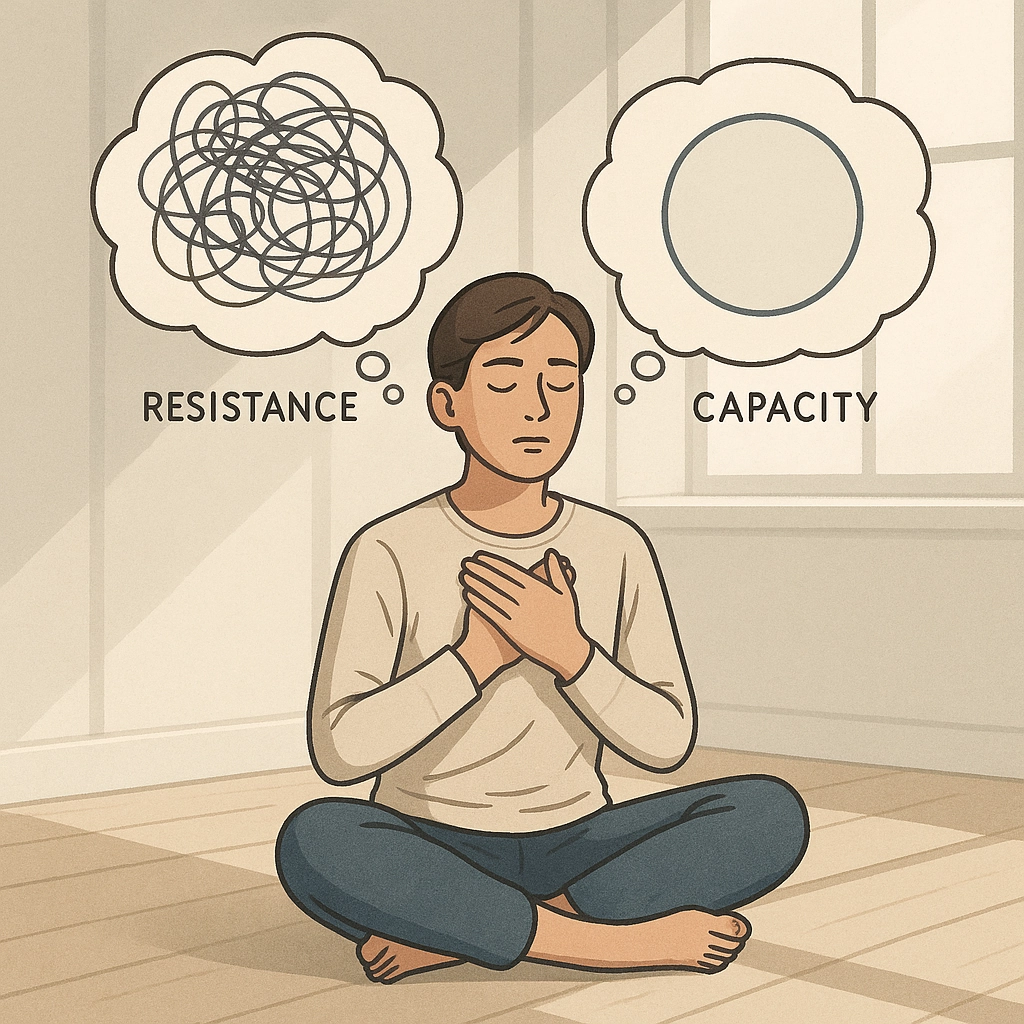
What does it mean to "get better at feeling"? It's fundamentally about expanding your nervous system's capacity to experience the full spectrum of human emotions without resistance.
Imagine your emotional capacity as a container. Most people have small containers for difficult emotions—a little anxiety fills them to overflowing. But through dedicated practice, you can expand this container. The same amount of anxiety that once overwhelmed you might eventually feel manageable, not because the emotion changed, but because your relationship with it transformed.
This distinction is crucial:
- Feeling better: Temporary relief through avoiding, reducing, or escaping emotions
- Getting better at feeling: Sustainable transformation through expanding your capacity to experience emotions fully
The first approach keeps you dependent on external circumstances. The second creates genuine internal freedom.
The Experiential Approach: Beyond Understanding to Embodiment
At Satori Prime, we've developed a methodology that moves beyond intellectual understanding into embodied practice. Founded by Guy and Ilan Ferdman in 2011, our approach integrates cutting-edge neuroscience with time-tested somatic practices.
Here's how it works:
1. Nervous System Regulation as Foundation
Rather than starting with mental concepts, we begin with the body. Your nervous system determines your perception of safety, and only from a regulated state can meaningful change occur.
"Most people try to think their way out of body-based problems," explains Guy Ferdman. "It's like trying to negotiate with a fire alarm while the building is burning. You have to address the actual fire—the dysregulated nervous system—first."
Our protocols specifically target vagal tone and autonomic regulation, creating the physiological conditions necessary for emotional expansion.
2. Present-Moment Awareness Practices
Similar to Sean Webb's meditation approach, we teach clients to observe thoughts and sensations without judgment. This isn't about analysis—it's about direct experience.
A key practice involves:
- Noticing emotional activation in the body
- Staying present with the physical sensations
- Allowing them to move through without resistance
- Observing how they naturally transform when not resisted
Over time, these practices literally rewire neural pathways, creating new response patterns to emotional triggers.

3. Community-Supported Transformation
Neuroplasticity research confirms that change happens most effectively in relational contexts. Our global community provides both the challenge and support necessary for sustained transformation.
The Awareness Effect program creates structured environments where members engage in "honest and compassionate" sharing. This combination of vulnerability and authentic feedback accelerates growth beyond what's possible in isolation.
The Science: Why This Actually Works
While the concept might seem counterintuitive at first, neuroscience supports the efficacy of this approach. Research in polyvagal theory shows that emotional resilience isn't about eliminating stress responses but expanding the window of tolerance.
Studies on interoception (internal body awareness) demonstrate that people who can accurately identify and stay present with bodily sensations show greater emotional regulation abilities. This isn't about controlling emotions but developing the capacity to experience them without becoming overwhelmed.
"The neural pathways for emotional processing are remarkably plastic," notes Ilan Ferdman. "What feels overwhelming today can become manageable tomorrow, not through avoidance but through gradual, supported exposure."
Real Stories, Real Transformation
Jonathan, a CEO and Satori Prime member, describes his experience: "I spent six years in traditional therapy trying to understand why I felt anxious in social situations. Six months in the Awareness Effect program, and I wasn't just understanding my anxiety—I was actually experiencing it differently. The same situations that once paralyzed me now feel navigable."
Sarah, a therapist herself, found that "the approach completely inverted my relationship with difficult emotions. Instead of seeing them as problems to solve, I now recognize them as messengers carrying important information. This hasn't just helped me personally—it's transformed how I work with clients."
These stories represent thousands of similar transformations across our community of over 12,500 students worldwide.

Beginning Your Journey to Emotional Mastery
If you're tired of the endless cycle of seeking relief without finding lasting change, consider these starting points:
-
Observe your current pattern: Notice how you typically respond to uncomfortable emotions. Do you distract, rationalize, or avoid? Simple awareness begins the shift.
-
Practice staying: The next time a difficult emotion arises, experiment with staying present with it. Where do you feel it in your body? Can you describe the physical sensations without the mental story?
-
Start small: Don't begin with your most triggering emotions. Like any training, begin with manageable challenges and gradually build capacity.
-
Find community: Transformation happens most effectively in supportive environments specifically designed for growth.
Beyond Temporary Relief to Lasting Freedom
True emotional freedom isn't about feeling good all the time—it's about having the capacity to feel everything fully. This distinction represents a fundamental paradigm shift in personal development.
As one of our longtime community members puts it: "I used to think freedom meant never feeling bad. Now I understand that real freedom is knowing I can handle whatever comes—the good, the bad, and everything in between."
This capacity-building approach doesn't just transform how you feel momentarily—it changes who you are fundamentally. When you no longer need to run from difficult emotions, you discover a wellspring of energy previously consumed by resistance.
Ready to stop trying to feel better and get better at feeling instead? Your journey toward genuine emotional mastery begins with a single step.
To learn more about our experiential approach to lasting change, visit our comprehensive guide to nervous system regulation and emotional mastery.