The Paradox of Emotional Wellness
We're living in the age of instant gratification—from same-day deliveries to on-demand entertainment. It's no surprise that we've applied this same expectation to our emotional lives. Feel bad? Here's a quick fix. Anxious? Try this 5-minute meditation. Uncomfortable emotions? Swipe them away.
But what if this obsession with "feeling better" is actually keeping us stuck?
At Satori Prime, we've discovered something counterintuitive: the path to genuine transformation isn't about feeling better—it's about getting better at feeling.
This distinction isn't just wordplay. It represents a fundamental shift in how we approach personal growth and emotional wellbeing. And it might just be the missing piece in your journey toward lasting change.
The Problem with "Feel Better" Culture
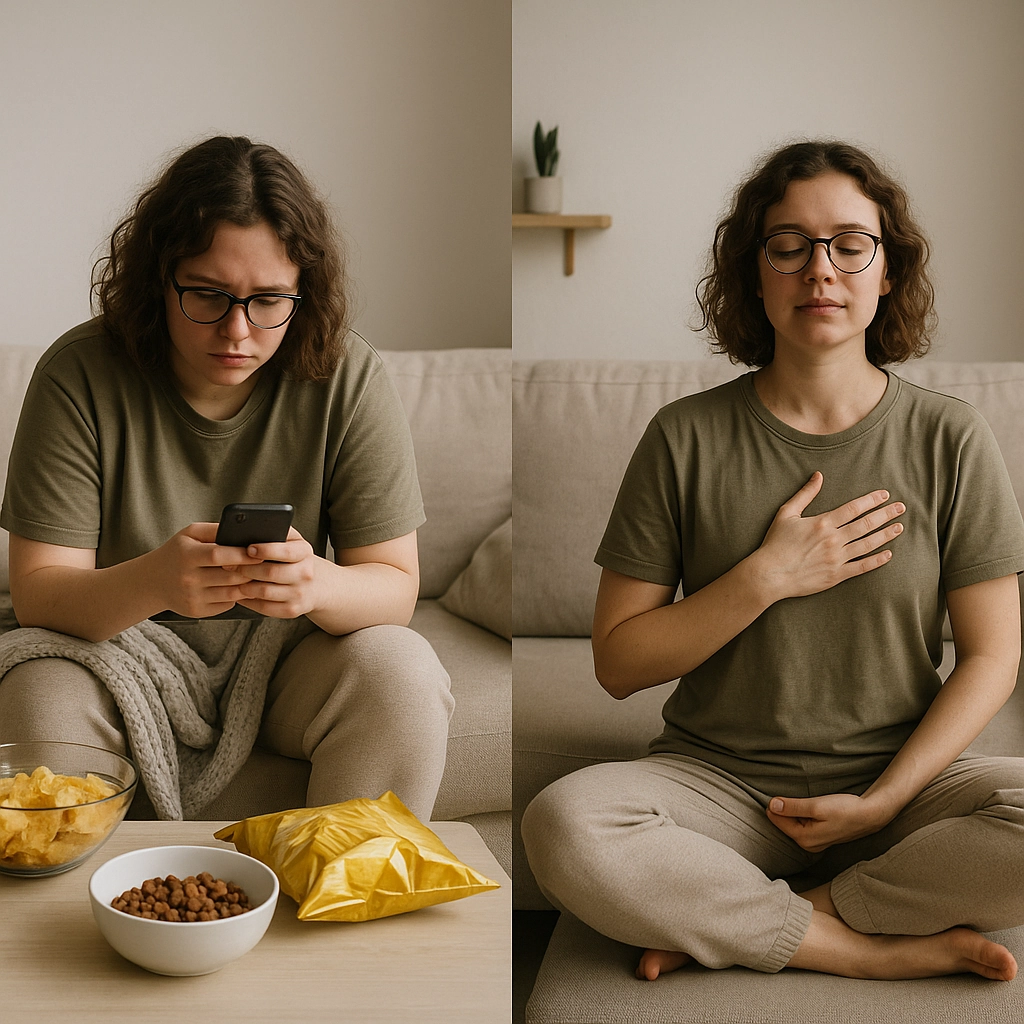
Our modern world has conditioned us to believe that negative emotions are problems to be solved rather than experiences to be felt. We've developed an impressive arsenal of avoidance strategies:
- Endless scrolling to numb discomfort
- Seeking quick dopamine hits through food, shopping, or substances
- Excessive positivity that masks underlying issues
- Intellectual analysis that keeps emotions at arm's length
These strategies might provide temporary relief, but they come at a steep cost: emotional stunting. By constantly running from difficult feelings, we never develop the capacity to process them. It's like skipping leg day at the gym for years, then wondering why you struggle to climb stairs.
"When we consistently avoid emotional discomfort, we're essentially telling our nervous system that these feelings are dangerous," explains Guy Ferdman, co-founder of Satori Prime. "This creates a self-reinforcing cycle where our tolerance for discomfort diminishes over time, making us even more avoidant."
What "Getting Better at Feeling" Actually Means
Getting better at feeling doesn't mean wallowing in negativity or seeking out painful experiences. Rather, it means developing your capacity to:
- Stay present with your emotions without immediately trying to change or escape them
- Recognize that emotions are temporary energy states moving through your body
- Differentiate between the emotion itself and the stories your mind creates about it
- Build resilience by gradually expanding your window of tolerance
Think of it like strength training for your emotional body. Each time you allow yourself to fully experience an emotion—whether it's anxiety, grief, or even intense joy—you're building neural pathways that make it easier to handle similar feelings in the future.
Satori Prime's Experiential Approach
Traditional personal development often focuses on cognitive understanding or behavioral modification. While these approaches have their place, they frequently miss the most crucial element: embodied experience.
At Satori Prime, we've developed an experiential approach that works directly with your nervous system to create lasting change. Here's what makes it different:
1. Nervous System Regulation as Foundation
Before attempting to transform your mindset or behavior, we focus on regulating your nervous system. When you're in a state of fight, flight, or freeze, even the most powerful insights can't take root.
Our approach helps you identify your nervous system state and develop practical tools to shift from dysregulation to regulation. This creates the stable foundation needed for deeper work.
2. Guided Experiential Processes
Rather than just talking about emotional capacity, we guide you through carefully designed experiences that gradually expand your ability to be with discomfort.
"Information without experience rarely leads to transformation," says Ilan Ferdman, co-founder of Satori Prime. "You can read about swimming for years, but until you get in the water, you'll never learn to swim."
These processes aren't about forcing catharsis or dramatic breakthroughs. Instead, they create a safe container for authentic emotional expression and integration.

3. Community as Catalyst
Humans are social creatures, and our nervous systems co-regulate with those around us. That's why our approach emphasizes community practice.
When you witness others navigating their emotions with courage and vulnerability, it signals to your own system that it's safe to do the same. This "emotional contagion" accelerates growth in ways that solo practice often can't match.
4. Integration Through Embodiment
Insights alone rarely create lasting change. Our approach emphasizes embodiment—the process of integrating new awareness into your lived experience.
Through specific somatic practices, we help you anchor new patterns in your body, not just your mind. This embodied integration is what allows changes to persist long after the initial insight has faded.
The Science of Emotional Capacity
Our approach isn't just philosophical—it's grounded in emerging neuroscience. Research on neuroplasticity shows that our brains can form new neural pathways throughout our lives, but only through consistent experience.
Studies on interoception (the ability to sense internal bodily states) reveal that greater interoceptive awareness correlates with improved emotional regulation. By becoming more attuned to the physical sensations of emotions, you gain greater agency over your response to them.
The polyvagal theory, developed by Dr. Stephen Porges, explains how our nervous systems respond to perceived safety and threat. By working directly with these biological mechanisms, we can create more lasting change than through cognitive approaches alone.

Real-World Results: Beyond Temporary Relief
When you get better at feeling, rather than just trying to feel better, remarkable shifts occur:
- Decreased reactivity: Small triggers no longer hijack your entire day
- Greater authenticity: You no longer need to hide parts of yourself that feel uncomfortable
- Improved relationships: Your increased capacity creates space for deeper connections
- Enhanced creativity: Energy previously used for avoidance becomes available for creation
- Sustained wellbeing: Instead of chasing fleeting moments of peace, you develop a more stable baseline
As one of our community members shared: "I spent years jumping from one personal development technique to another, always feeling better temporarily but ultimately landing back where I started. Learning to actually feel my emotions, rather than trying to fix them, has created changes that actually stick."
Starting Your Journey: From Avoidance to Capacity
Building emotional capacity isn't about dramatic transformations—it's about consistent practice. Here are some starting points:
-
Notice the urge to avoid: The next time you feel uncomfortable emotions arising, pause and notice your automatic response. Do you reach for your phone? Look for a snack? Start problem-solving? Just noticing these patterns is the first step.
-
Create a container: Set a timer for 2-3 minutes and allow yourself to fully experience whatever emotion is present. Remind yourself that you can handle this feeling for this short duration.
-
Focus on physical sensation: Where do you feel the emotion in your body? Is it a tightness in your chest? A heaviness in your stomach? Bringing awareness to these physical sensations helps separate the emotion from the story about the emotion.
-
Practice co-regulation: Share your practice with a trusted friend or partner. Taking turns holding space for each other's emotions accelerates growth for both of you.
-
Celebrate capacity: Rather than only celebrating when difficult emotions pass, acknowledge your growing ability to be with them. This reinforces the neural pathways you're building.
The Invitation to Lasting Change
The journey from "feeling better" to "better at feeling" isn't always comfortable, but it's infinitely rewarding. As you build emotional capacity, you'll find yourself less controlled by temporary feelings and more able to act from your deeper values and vision.
At Satori Prime, we've witnessed thousands of people transform through this experiential approach. Not through bypassing difficult emotions, but by developing the capacity to fully experience them.
This approach doesn't promise instant relief. But it does offer something far more valuable: the ability to navigate life's inevitable challenges with grace, presence, and authenticity.
Ready to experience this approach for yourself? Our 10-Minute Nervous System Protocol is the perfect place to start. This free resource gives you a taste of how direct nervous system work can create profound shifts in your emotional capacity.
👉 Try our free protocol: 10-Minute Nervous System Protocol
Remember: The goal isn't to feel good all the time. It's to develop the capacity to feel everything—and to find the gifts hidden within the full spectrum of your emotional experience.