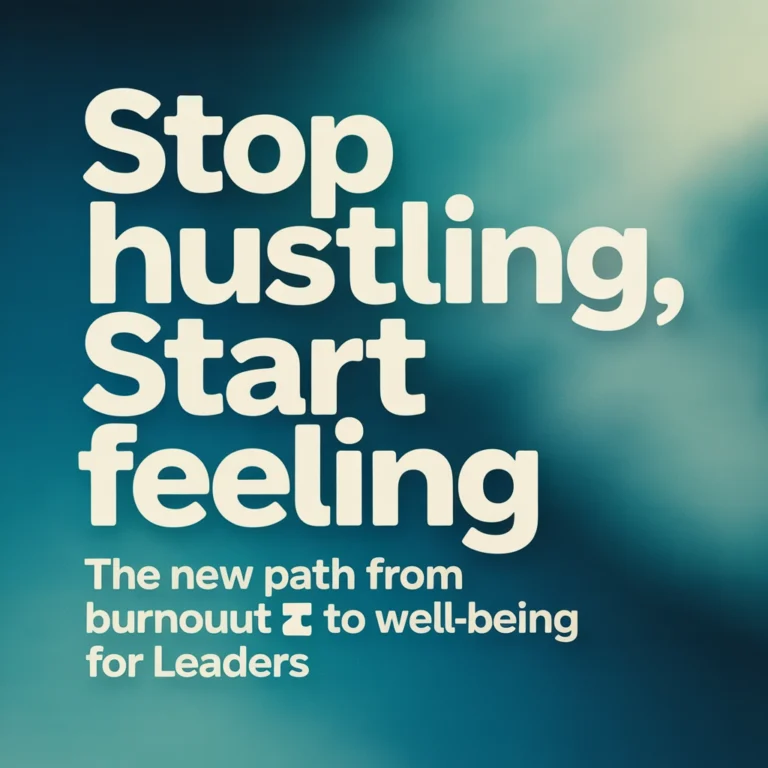
The Hustle Hangover: Why Achievement Culture Is Failing Leaders
Remember when "rise and grind" and "hustle harder" were the battle cries of success? For years, leadership culture has glorified the 80-hour work week, the constant connectivity, and the "sleep when you're dead" mentality. But there's a reckoning happening. Leaders across industries are waking up exhausted, disconnected, and wondering why success feels so empty.
The data is sobering: 76% of senior leaders report experiencing burnout at least sometimes, with 28% describing burnout as a constant companion. The very tools that once propelled us forward—relentless drive, perfectionism, and always-on availability—have become the anchors dragging us down.
At Satori Prime, we've witnessed a fundamental shift. The most effective leaders aren't those pushing hardest—they're the ones who've learned to pause, process, and prioritize their internal landscape.
The Hidden Cost of Constant Hustle
"I was making more money than ever, but I couldn't sleep. I couldn't enjoy a single meal without checking my phone. My kids stopped asking me to play because they knew the answer would be 'after this email.'"
This confession from a tech executive client captures what many leaders experience. The hustle might deliver short-term wins, but the long-term costs are steep:
- Physical deterioration: Chronic stress destroys sleep quality, compromises immune function, and accelerates aging
- Relationship erosion: The first casualties of overwork are usually our closest connections
- Diminishing returns: The cruel irony is that beyond a certain threshold, more hours produce worse work

The most dangerous aspect? Hustle culture masquerades as dedication. We mistake self-neglect for commitment, and burnout for a badge of honor.
The Nervous System Revolution: Understanding Why You Can't Just "Push Through"
To truly move beyond hustle culture, we need to understand what's happening in our bodies when we push too hard for too long.
Your nervous system—the command center for your thoughts, emotions, and physical responses—wasn't designed for constant activation. When you remain in "fight or flight" mode through chronic stress, your body floods with cortisol and adrenaline. These hormones are lifesavers in true emergencies but toxic when constantly present.
The science is clear: extended periods in this heightened state lead to:
- Decision fatigue: Your prefrontal cortex (responsible for executive function) becomes depleted
- Emotional dysregulation: Triggering disproportionate reactions to minor stressors
- Cognitive narrowing: Losing the ability to see creative solutions or big-picture thinking
This isn't weakness—it's biology. And understanding this biological reality is the first step toward sustainable leadership.
Feeling as a Leadership Strategy: The Three-Level Approach
Moving from hustle to health requires action at three distinct levels:
Level 1: Personal Practices
The foundation begins with reconnecting to your body's signals and establishing sustainable rhythms:
- Emotional intelligence check-ins: Schedule 5-minute pauses throughout your day to name your emotions without judgment
- Recovery rituals: Identify activities that genuinely recharge you (not just distract you)
- Sleep prioritization: Treat sleep as your most important meeting of the day
One CEO we worked with began blocking 90 minutes each afternoon for a walk outside, no phone allowed. "I was terrified the business would fall apart without my constant attention," he admitted. "Instead, our quarterly results improved. Those walks are when my best strategic thinking happens."
Level 2: Relational Shifts
Hustling isolates. Healing happens in connection:
- Vulnerable leadership: Share your challenges appropriately with your team
- Collective capacity: Build teams based on complementary strengths rather than similar work styles
- Feedback loops: Create safe channels for honest communication about workload and expectations

"I used to think asking for help meant I was failing," shared a marketing director. "Now I understand that knowing when to lean on others is actually advanced leadership."
Level 3: Structural Changes
Individual efforts aren't enough if the system remains broken:
- Redefine productivity: Measure output and impact rather than hours worked
- Normalize boundaries: Model healthy limits by respecting evenings, weekends, and vacations
- Challenge success metrics: Incorporate well-being indicators into performance reviews
One forward-thinking organization we partnered with introduced "restoration days"—quarterly days off that don't count against vacation time, specifically designated for recharging. The result? Absenteeism dropped 26% and employee satisfaction scores rose 31%.
The Counterintuitive Truth: Less Hustle, Better Results
Research from Harvard Business School found that forcing employees to disconnect during non-work hours actually improved both creativity and efficiency during work hours. This isn't just about feeling better—it's about performing better.
When we work from a state of nervous system regulation rather than perpetual emergency:
- Creativity expands: The relaxed mind makes connections the stressed mind cannot
- Relationships deepen: Genuine presence builds trust and loyalty
- Sustainability increases: The marathon of leadership requires pacing, not sprinting

Practical Steps to Start Your Transition
Ready to begin your journey from hustle to health? Start with these actionable steps:
- Conduct a personal energy audit: For one week, track activities that drain versus energize you
- Implement "golden hour" mornings: Reserve the first hour of your day for presence rather than productivity
- Practice the "worthy pause": Before responding to demands, ask: "Does this require immediate action?"
- Establish tech boundaries: Create phone-free zones and times in your home
- Seek somatic support: Explore practices like breathwork, meditation, or embodiment coaching
The Future of Leadership: Integration, Not Separation
The new paradigm of leadership isn't about choosing between performance and well-being—it's about recognizing they're inseparable. When we honor our human needs, we unlock our human potential.
At Satori Prime, we've guided countless leaders through this transformation. The consistent feedback? "I'm accomplishing more while doing less." This isn't magic—it's what happens when you align with your neurobiological design rather than fighting against it.
The most powerful leadership tool isn't your strategic mind or your tireless work ethic—it's your ability to stay regulated, present, and connected even amid challenges. This capacity begins with giving yourself permission to feel, rest, and recognize your inherent worth beyond achievement.
Are you ready to stop hustling and start healing? Your journey toward sustainable success begins with a single, counterintuitive step: slow down to speed up.
Ready to learn more about how embodied leadership can transform your effectiveness without sacrificing your well-being? Visit our mindset resources or book a discovery call with one of our expert coaches.