Most folks on the personal growth path have asked themselves: “How do I feel better, fast?” It’s natural to want relief when you hit moments of stress, overwhelm, or frustration. But there’s a twist most people miss: The real gift isn’t in feeling better (at least, not just on the surface). It’s in getting better at feeling.
This seemingly small shift has huge implications—not just in your emotional world, but in your personal growth, relationships, and career performance. Let’s look at why emotional skills are the foundation for true transformation, and how to cultivate them.
Why “Getting Better at Feeling” Beats Just Trying to Feel Better
You’ve probably heard, “Don’t just brush your feelings under the rug.” But when the pressure is on, most of us still reach for quick fixes—Netflix binges, snacks, doomscrolling, or a pep talk to “think positive.” While there’s nothing wrong with wanting to change your mood, skipping straight to relief can actually work against you in the long run.
Getting better at feeling means you:
- Stay present with every emotion (even the tricky ones like jealousy, anger, shame, or despair)
- Discover the hidden messages and lessons inside your emotional experiences
- Build the strength to navigate setbacks, stress, and difficult conversations without going numb or blowing up
When you grow your capacity for emotional presence, you unlock resilience—the core skill for true, lasting change.
The Science: Emotional Intelligence, Not Just “Soft Skills”
At Satori Prime, we’re big on turning ancient wisdom into actionable insights. But we also geek out hard on modern science. Emotional intelligence (known as “EQ,” and championed by leaders like Marc Brackett at Yale) has been proven to boost performance, decision-making, relationship quality, and leadership effectiveness.
Think about it:
- Leaders with high EQ are sought after for their steady presence and problem-solving skills
- Teams with high emotional intelligence collaborate better, innovate more, and recover from challenges faster
- Individuals who work skillfully with their emotions experience less burnout and more sustainable success
What’s more, research shows that emotional regulation—a key piece of EQ—is learnable. With the right tools and support, anyone can expand their emotional range and resilience.

“Our Intent Isn’t to Feel Better, But to Get Better at Feeling”
This quote from Michael Brown’s “The Presence Process” is a total paradigm shift. It’s not about escaping discomfort, but about relating to it differently.
Here’s why that matters:
- Trying to force yourself to only feel “good” emotions keeps you stuck reacting or avoiding when tougher ones show up.
- Developing emotional skills helps you ride out waves of stress, sadness, or fear with less drama (and less self-judgment).
- Over time, this flexibility helps you respond to life’s curveballs with calm, creativity, and real self-trust.
Why Mindset Work Alone Rarely Sticks
If you’ve ever tried to “think positive” and found it only works for a bit—you’re not alone. That’s because thoughts are just one small layer of our internal experience.
Most of our habits, reactions, and self-sabotages run deeper, fueled by unprocessed emotions and nervous system patterns. When we skip over these foundations and aim for quick-fix mindset shifts, change rarely lasts.
Getting better at feeling works because it:
- Gets to the root, not just the surface
- Changes your relationship with discomfort and challenge
- Allows true transformation to ripple outward—in mindset, actions, health, and connection
How Getting Better at Feeling Changes Your Life—and Your Work
Here’s where the magic really happens. Imagine walking into any room, knowing you can:
- Handle tough feedback without defensiveness
- Stay calm and clear during high-stakes moments
- Turn emotional triggers into learning moments, not landmines
- Connect with others in a way that feels authentic, trustworthy, and open
Whether you’re leading teams, growing a business, building intimate partnerships, or parenting, emotional agility becomes your superpower. It reduces conflict, boosts innovation, and helps you recover from setbacks without losing heart.
Companies like Google, Microsoft, and Facebook now prioritize emotional intelligence in their workplaces because they know: it’s not just a “nice-to-have.” It’s a must-have for thriving in a complex, fast-changing world.
The Key Competencies: Getting Better at Feeling, One Step at a Time
Here are some building blocks you can develop:
1. Emotional Awareness
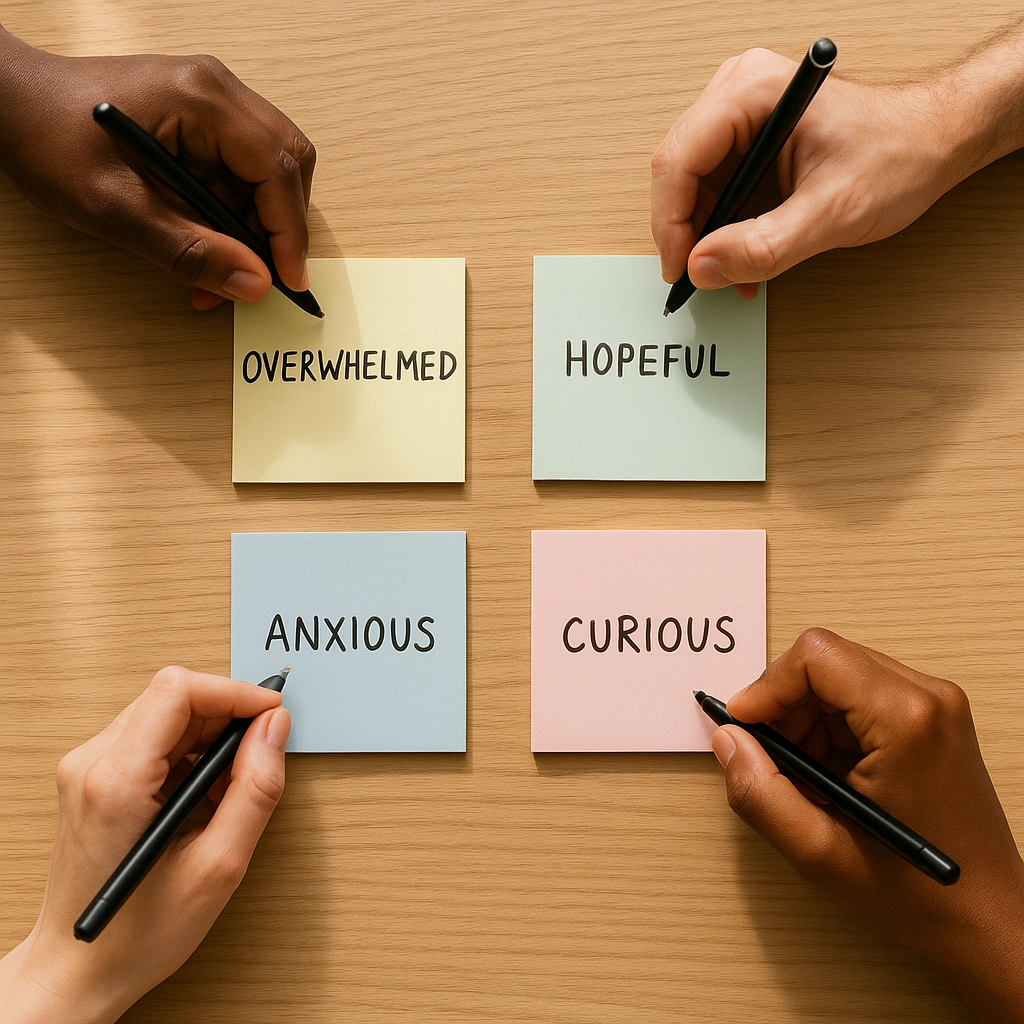
Start by naming what you feel. Use physical cues (tight chest, buzzing energy, sinking gut) to tune in. Pause and ask, “What am I feeling right now?” Even just labeling the emotion quietly to yourself (“I feel anxious,” “I feel irritated,” “I feel hopeful”) makes a difference.
2. Emotional Vocabulary
Get specific. Instead of “bad,” try “disappointed,” “restless,” or “overwhelmed.” The more words you have for emotions, the less overwhelming they become. This granularity is linked to better emotional regulation and improved mental health.
3. Emotional Tolerance
Set a timer and sit with uncomfortable feelings for 90 seconds before acting on them. Notice the urge to distract or numb out—and try just being with the sensation instead. Over time, you’ll realize emotions come and go, and you’re strong enough to ride them out.
4. Emotional Integration
Ask: “What is this feeling telling me? Is there a need or value at stake here?” Use your emotions as guidance, not just obstacles. This turns every emotional moment into an opportunity for growth.
The Ripple Effect—For You and Everyone Around You
As you practice these skills, you might notice:
- Less reactivity and less stuck-ness
- More clarity, ease, and flow—even in tricky situations
- Deeper, more rewarding relationships
- Greater trust in your own capacity to face whatever arises
The benefits don’t just stop at you. Your family, friends, teams, and colleagues all feel the difference when someone brings emotional presence and skill to the table. You become a safe, inspiring force—someone others trust with their own realness and vulnerability.
Let’s Be Honest: This Work Isn’t Always Easy
If you’re used to powering through or numbing out, slowing down to feel can be…uncomfortable. But it also unleashes creativity, self-compassion, and the type of confidence that doesn’t get shaken by every passing storm.
Think of it like going to the emotional gym. The more reps you put in, the stronger, braver, and more capable you get—not just for yourself, but for everyone you touch.

Ready to Go Deeper?
Getting better at feeling isn’t about making “bad” emotions disappear. It’s about building the capacity for all of life—to savor the good, learn from the hard, and bring your whole self into everything you do.
This is the approach at the heart of all personal and professional transformation. If you’re ready to make emotional mastery your new normal, explore more tools and insights at Satori Prime’s blog or book a call with our team to take your journey to the next level.
Feeling is the foundation. When you build this skill, everything else gets easier, richer, and a lot more real.