You’ve done the breathing exercises. You’ve read the parenting books. You’ve probably even tried to "zen out" while your toddler is screaming or your partner is giving you that specific brand of silent treatment that feels like a cold wind in a dark alley.
And yet, the peace remains elusive. Why?
Because most of us are trying to "fix" our homes from the outside in. We focus on the behaviors, the schedules, and the chores. We try to manage the chaos like a corporate CEO, but your family isn’t a business. It’s a biological ecosystem. And in this ecosystem, the most powerful currency isn't words or rules: it’s the state of your nervous system.
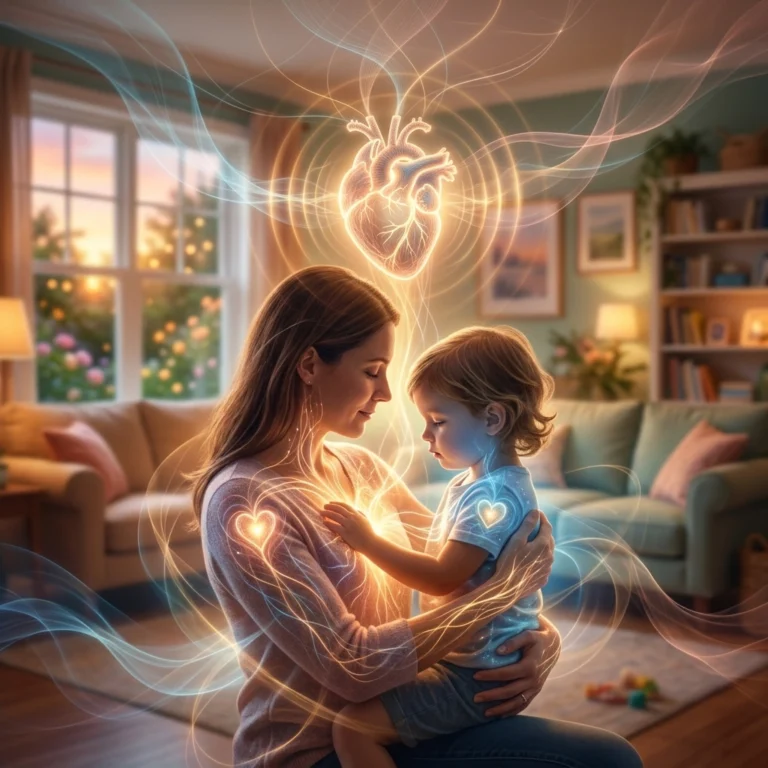
If you want to improve relationships and be a better parent, you have to stop looking at what everyone else is doing wrong and start looking at the invisible, pulsing neon web of energy connecting you all.
It’s called co-regulation. And it’s the secret sauce to a life that doesn't feel like a constant battle for survival.
The Myth of the Independent Self
We live in a culture obsessed with independence. We’re told we should be able to "self-soothe" and "keep it together." But biologically? That’s total BS. Humans are social mammals. We are neurobiologically wired to look to one another for safety.
Your nervous system is constantly scanning the environment, asking one question: Am I safe? And for your children and your partner, the "environment" is you.
When you walk into a room stressed, tight, and vibrating with unspoken anxiety, you aren't just "having a bad day." You are broadcasting a signal of "Danger!" to every other nervous system in the house. This is where the friction starts. This is why a simple question about dinner turns into a blowout argument.

Stop Trying to Feel Better
Here is the Satori Prime truth that most people run away from: "Stop trying to make yourself feel better and simply get better at feeling."™
Most of our parenting and relationship "strategies" are just sophisticated ways to avoid discomfort. We want our kids to stop crying so we don't have to feel the irritation. We want our partners to change so we don't have to feel lonely. We are constantly trying to manipulate the external world to regulate our internal world.
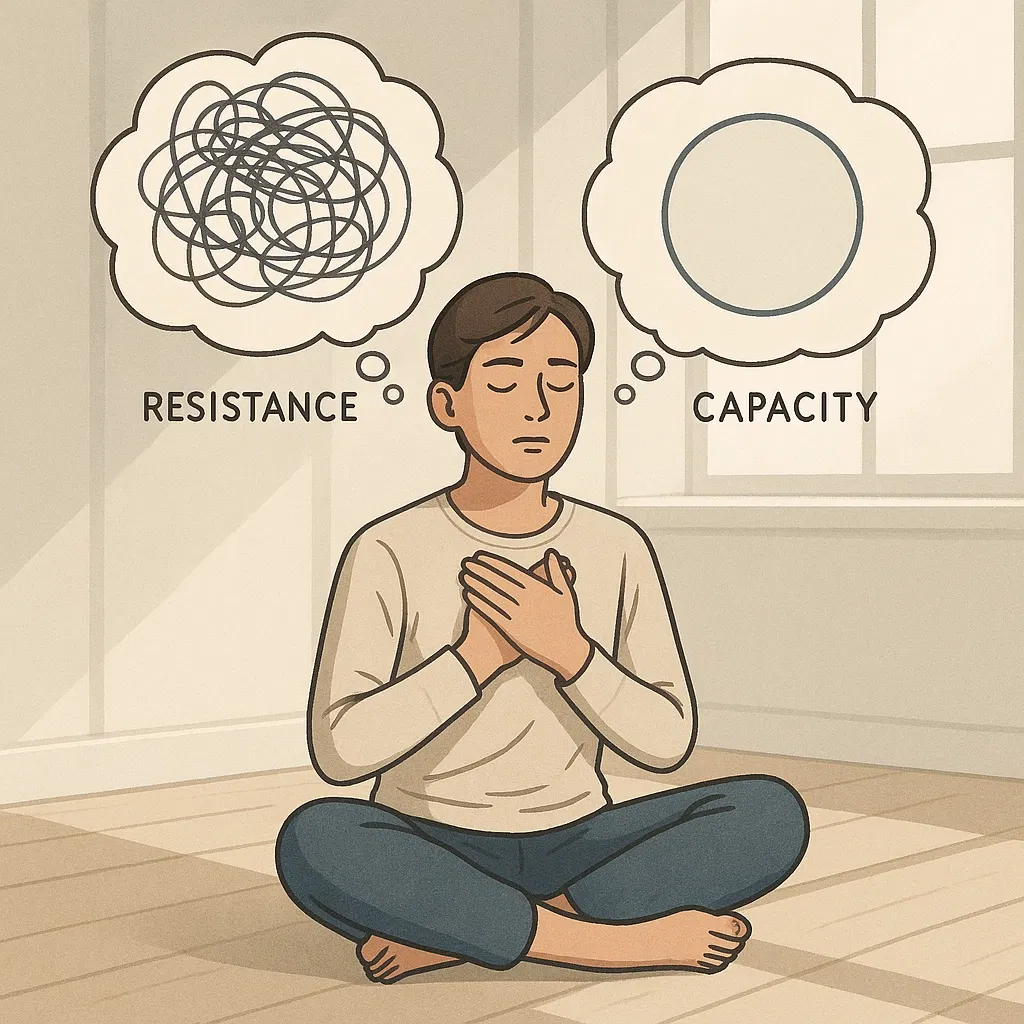
But true peace: the kind that settles deep into your bones: comes from the opposite direction. It comes from having the capacity to sit in the fire of a messy moment without burning the house down. It’s about expanding your window of tolerance so that you can stay present when things get weird.
When you stop chasing and start feeling, you stop being a victim of the household mood and start becoming the architect of it.
The Energetic Ripple: How You Heal Others
Think of your nervous system as a stone dropped into a still pond. Every thought, every repressed emotion, and every moment of grounded presence creates ripples.

If your stone is jagged and heavy with unexamined trauma, the ripples are chaotic. But when you do the work to regulate your own system: to breathe, to ground, to inhabit your body: the ripples become a steady, rhythmic pulse of safety.
This is the heart of co-regulation. When your child is in a meltdown, they don't need a lecture. They don't even necessarily need a time-out. They need a "time-in" with a nervous system that is more regulated than theirs. They need to "borrow" your calm.
When you stay grounded while they are losing it, your nervous system literally sends a signal to theirs that says: “I’ve got you. The world isn't ending. We can handle this feeling together.” Over time, this builds the neural pathways in their brain that allow them to eventually regulate themselves.
This starts early: even before birth. If you're interested in the deep roots of this, check out how prenatal imprinting sets the stage for a child's entire nervous system development.
Relationship Alignment: The Dance of Two Systems
In romantic relationships, co-regulation is the difference between a partnership that feels like a prison and one that feels like a sanctuary.
Most couples are stuck in "reactivity loops." Partner A gets triggered, their nervous system goes into "fight" mode (criticism, shouting). Partner B senses the threat and goes into "freeze" or "flight" (withdrawing, stonewalling). This is just two nervous systems trying to survive each other.
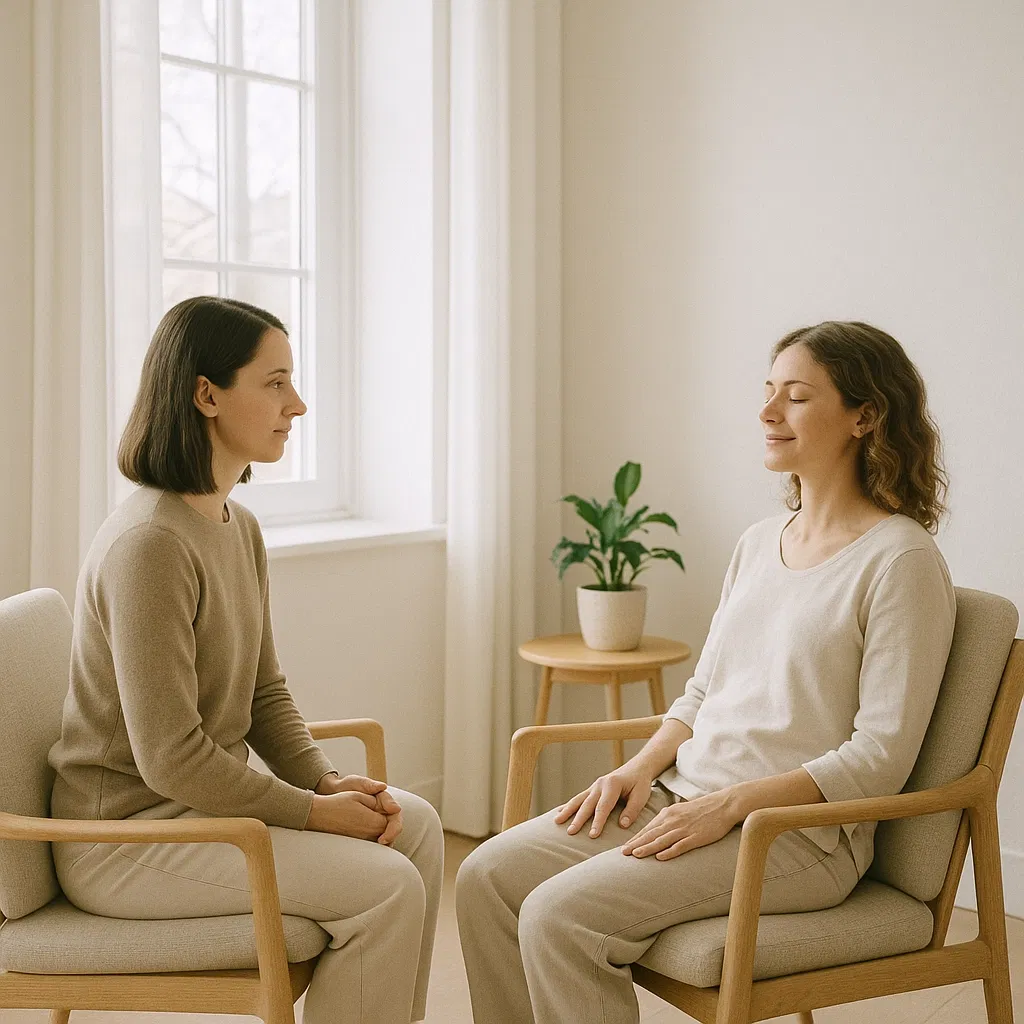
To have a successful relationship, one person has to be brave enough to break the loop. One person has to choose to regulate themselves first.
This isn't about being a doormat. It’s about being a leader. By staying centered and open, you provide the "anchoring" effect that allows your partner's system to drop the defenses. You move from a battlefield to a shared space of exploration.
Practical Steps to Be More Peaceful
So, how do you actually do this? How do you move from a state of constant reaction to one of visionary presence?
- Check Your Internal Weather: Throughout the day, ask yourself: "What is my nervous system broadcasting right now?" Is it tension? Is it a 'hurry up' energy? Just noticing it is the first step toward shifting it.
- Focus on the Breath (But Not for the Reason You Think): We don't breathe to "relax." We breathe to signal to the brain that we are safe enough to take a deep breath. It's a physiological hack.
- Physical Touch: A long, 20-second hug releases oxytocin and literally forces two nervous systems to sync up. It’s one of the fastest ways to be a better parent and partner.
- Embrace the Strange: Life is going to be messy. Your kids will scream. Your partner will forget the milk. Instead of fighting the reality of the moment, embrace the strange. When you stop resisting the "what is," your nervous system stops perceiving it as a threat.
- Expand Your Capacity: This is the core of our work at Satori Prime. It’s not about positive thinking; it’s about nervous system capacity.
The Visionary Household
Imagine a home where the primary goal isn't "getting things done," but maintaining a state of high-level connection. A home where emotions: even the big, scary, "negative" ones: are welcomed as guests rather than treated as intruders.
When you prioritize co-regulation, you aren't just making your life easier today. You are literally reprogramming the ancestral patterns of your lineage. You are teaching your children that they are safe in their own skin. You are showing your partner that love is a place of rest, not a place of performance.
This is how we change the world. It’s not through grand political gestures, but through the quiet, profound work of regulating our own systems so that those we love can finally breathe.
It’s time to stop making headway and start making heart-way.
Getting Started on the Path
If your home feels like a pressure cooker, remember that you have the power to turn down the heat. It starts with one conscious breath. It starts with the willingness to feel your own discomfort instead of projecting it onto your kids or your spouse.
You don't need a PhD in psychology. You just need a commitment to your own presence. Explore the subconscious mind to understand the scripts running in the background, and then choose a different story.
Your nervous system is the key. Unlock the door to a peaceful home, one heartbeat at a time.