You know that feeling when you're completely stressed out, your heart is racing, and then someone you trust just sits with you? Suddenly, without them saying a word, you start to feel calmer. Your breathing slows down. The world doesn't feel like it's ending anymore.
That's not just your imagination: that's co-regulation in action, and it's one of the most powerful healing tools your nervous system has access to.
Here's the thing most people don't realize: we weren't designed to regulate our emotions alone. Despite what our culture tells us about being "independent" and "strong," our nervous systems are literally wired for connection. And when we try to heal trauma or manage stress in isolation, we're fighting against millions of years of evolution.
What Is Co-Regulation?
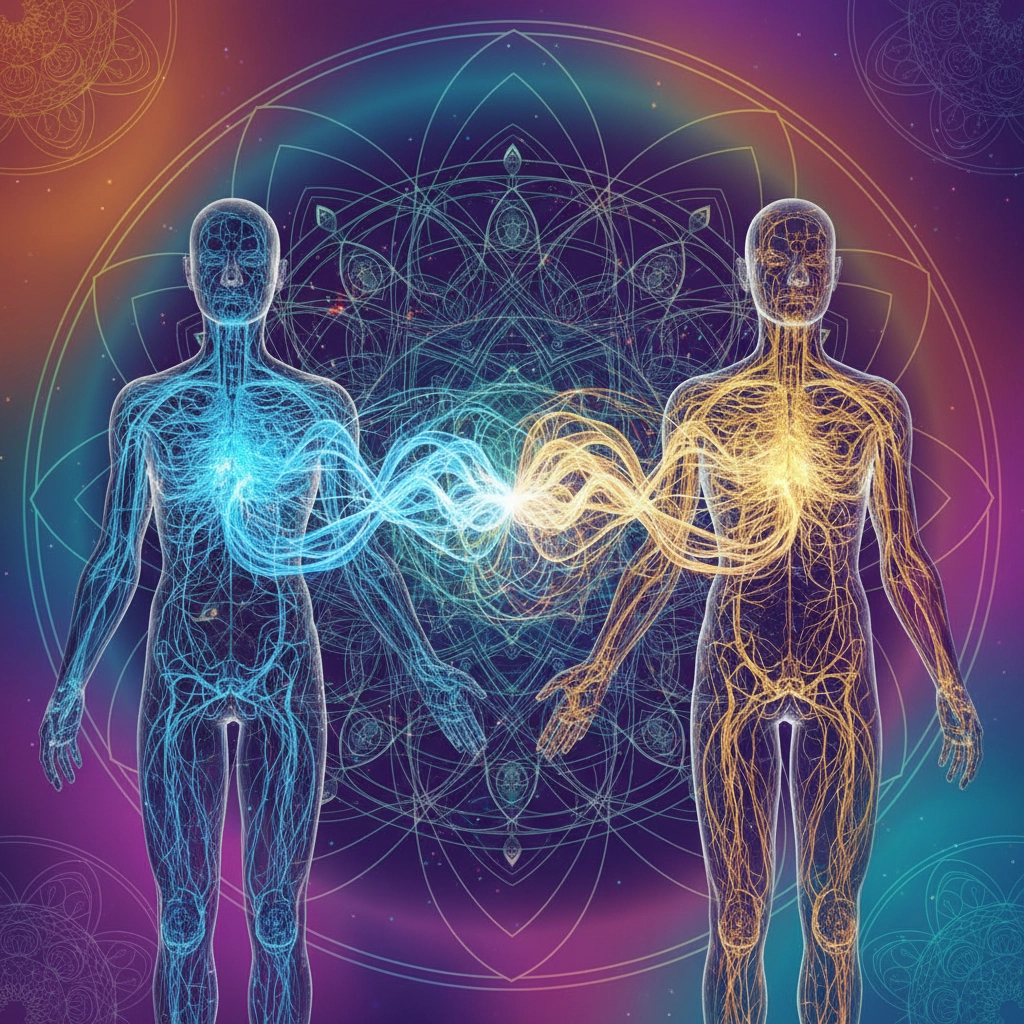
Co-regulation is the biological process where one person's regulated nervous system helps calm another person's dysregulated nervous system. Think of it like nervous system regulation: when two people are together, their nervous systems actually sync up and influence each other.
This isn't some touchy-feely concept. It's hardcore neuroscience.
When you're in the presence of someone who's calm and grounded, your nervous system picks up on their state through tiny cues: their breathing pattern, heart rate, vocal tone, even their posture. Your system then starts to match theirs, shifting from a state of stress (fight, flight, or freeze) into a state of safety and connection.
This is completely different from self-regulation, which is what most personal development focuses on. Self-regulation is your ability to manage your own emotions and reactions. But here's the catch: you can't develop healthy self-regulation without first experiencing co-regulation with others.
It's like learning to ride a bike. You need someone holding the back of the seat before you can pedal on your own.
The Neurobiology Behind Safe Connection
Let's get into what's actually happening in your brain and body during co-regulation, because this stuff is fascinating.
When you're in a co-regulatory relationship: whether that's with a parent, partner, friend, or therapist: several powerful biological processes kick in:
Hormonal Harmony: Your oxytocin levels (the bonding hormone) increase while your cortisol levels (stress hormone) decrease. This happens in both people simultaneously. You're literally creating a biochemical environment for healing.
Neural Rewiring: Repeated experiences of co-regulation create new neural pathways in your brain through neuroplasticity. These pathways make it easier for you to access calm states in the future, even when you're alone.
Polyvagal Activation: According to Polyvagal Theory, co-regulation activates your ventral vagal complex: the part of your nervous system responsible for feeling safe, connected, and socially engaged. This is the optimal state for healing, learning, and personal development.
When your nervous system is in this ventral vagal state, amazing things happen:
- Your immune system functions better
- Your digestion improves
- You can think more clearly
- You feel more creative and playful
- You're more open to learning and growth
Why Your Nervous System Can't Heal Alone
Here's where things get really important for anyone on a healing journey.
Traditional approaches to personal development often focus on individual techniques: meditation, journaling, affirmations, mindset work. And while these tools are valuable, they miss a crucial piece of the puzzle.
Trauma lives in isolation. When we experience overwhelming stress or trauma, our nervous system goes into protective mode, essentially cutting us off from others to keep us "safe." The problem is, this same protective mechanism that helped us survive also prevents us from healing.
You can't think your way out of nervous system dysregulation. You can't meditate your way out of it. You can't positive-think your way out of it.
You need another regulated nervous system to help yours remember what safety feels like.
This is especially true if you experienced early childhood trauma or neglect. During those crucial developmental years, your nervous system was supposed to learn regulation through co-regulation with caregivers. If that didn't happen consistently, you might be walking around as an adult with a nervous system that never learned how to truly calm down.

The Healing Power of Safe Relationships
So how does co-regulation actually create healing? Let's break it down:
Restoring Physiological Balance: When you're with someone whose nervous system is regulated, their calm presence literally signals safety to your system. Your heart rate slows, your breathing deepens, and your body shifts out of survival mode into a state where healing can actually happen.
Building Resilience: Each positive co-regulatory experience builds your resilience reservoir. You're essentially practicing what it feels like to be calm and safe, which strengthens your ability to return to that state more quickly when life gets stressful.
Correcting Past Experiences: Co-regulation provides what psychologists call "corrective relational experiences." If you grew up with inconsistent or harmful caregiving, healthy co-regulation can literally rewire those early neural patterns.
Developing Self-Regulation: Paradoxically, the more you experience co-regulation, the better you become at self-regulation. It's like filling up your internal battery so you have reserves to draw from when you need to regulate alone.
Practical Co-Regulation in Action
Understanding the theory is one thing, but how do you actually use co-regulation in your life? Here are some practical applications:
In Parenting: Instead of trying to logic your child out of a meltdown, focus on regulating your own nervous system first. Your calm presence will naturally help them regulate. Use soothing vocal tones, gentle touch, and synchronized breathing.
In Relationships: Create intentional moments of connection with your partner. This might look like synchronized breathing exercises, eye gazing, or simply sitting together in silence. The goal isn't to fix each other's problems: it's to offer your regulated presence.
In Therapy: A skilled therapist uses their regulated nervous system to create safety for their clients. This co-regulatory relationship becomes the foundation for all other therapeutic work.
In Friendships: Sometimes the most healing thing you can do is simply be present with someone who's struggling. Your grounded presence can be more powerful than any advice you might offer.

When Co-Regulation Goes Wrong
It's important to note that co-regulation isn't always positive. If you're trying to co-regulate with someone who's highly dysregulated, you might actually pick up their stress instead of offering them calm. This is why boundaries and your own nervous system health are so crucial.
You can't give what you don't have. If your own nervous system is chronically dysregulated, attempting to help others regulate can lead to burnout and secondary trauma.
The Ripple Effect
Here's what gets really exciting about co-regulation: it creates ripple effects throughout your entire life.
When you experience consistent co-regulation in one relationship, it improves your relationships across the board. You become more emotionally available, more resilient, and more able to offer regulation to others.
This is how healing spreads through families, communities, and generations. One regulated nervous system can impact countless others.
Moving Forward
If you're someone who's been trying to heal or grow primarily through individual practices, consider this your invitation to explore the power of connection. This doesn't mean abandoning your personal practices: it means recognizing that healing happens in relationship.

Look for relationships where you feel genuinely safe and seen. This might be with a therapist, a close friend, a partner, or even a support group. The key is finding people who can offer you their regulated presence without trying to fix or change you.
Remember: your nervous system was designed for connection. When you honor this biological truth and prioritize co-regulation alongside your other healing practices, you're working with your neurobiology instead of against it.
And that's when real transformation becomes possible.
Your nervous system has been waiting your whole life for safe connection. Maybe it's time to finally give it what it needs to heal.