
Let’s be real for a second: Most of us are walking around like overcharged batteries waiting to explode or short-circuit. We enter our relationships, the most sacred spaces of our lives, carrying a nervous system that is frayed, fried, and stuck in survival mode. Then, we wonder why our partners "don’t get us" or why our kids are "acting out."
The truth is, your relationship isn't failing because you lack communication skills. It’s failing because your nervous systems are speaking two different languages of threat.
At Satori Prime, we live by a philosophy that flips the script on traditional self-help: "Stop trying to make yourself feel better and simply get better at feeling."™
When you stop running from the discomfort and start understanding the bio-electric dance between you and your loved ones, everything changes. This is the art of co-regulation. It’s the visionary path to becoming more peaceful, a better parent, and a partner who actually vibrates on the frequency of love rather than the frequency of "please don't leave me."
Here are the 7 biggest relationship mistakes you’re making and the co-regulation shifts that will heal them.
1. The War of the Ego: Trying to Win Instead of Connect
We’ve all been there. A small comment about the dishes spirals into a three-hour trial where you’re the prosecutor, the judge, and the jury. You want to be "right." You want to prove that they are "wrong."
But here’s the psychedelic reality: In a relationship, if one person wins, the relationship loses. When you fight to win, your nervous system is in full "Fight" mode. Your brain shuts down empathy to focus on survival. You see your partner as a predator, not a lover.
The Co-regulation Fix:
Instead of sharpening your tongue, soften your system. The moment you feel that heat in your chest, realize you’ve left the "Safety" zone. Say, "I’m getting activated, and I care more about us than this argument. Can we just sit together for a minute?"
When you regulate your own system, dropping your shoulders, slowing your breath, you send a literal signal of safety to their brain. You aren’t just talking; you’re broadcasting peace.

2. The Silent Volcano: Avoiding Hard Conversations
You think you’re being "nice" by not bringing up that thing that bothered you. You’re "keeping the peace." But actually, you’re just burying nuclear waste in the backyard of your soul. Eventually, the radiation leaks.
Avoidance is a "Freeze" or "Fawn" response. Your body thinks conflict equals death, so it shuts down your voice. This creates an invisible wall of static between you and your partner.
The Co-regulation Fix:
Stop waiting for the "perfect" time, it doesn't exist. Instead, create a "Safe Container." Use touch. Hold their hand while you say the hard thing. Physical contact lowers cortisol. By staying physically connected while discussing emotional discomfort, you train your nervous systems to handle "heat" without melting down. This is how you improve relationships, not by avoiding the fire, but by becoming fireproof together.
3. The Vagal Ghost: Stonewalling and Shutting Down
This is the ultimate disconnect. One person gets overwhelmed and just… leaves. Maybe they walk out of the room, or maybe they just go "behind the eyes" and become a ghost. This is "Dorsal Vagal Shutdown." To the other person, this feels like abandonment. It triggers a primal panic.
The Co-regulation Fix:
If you’re the one shutting down, name it. "My system is crashing. I need 15 minutes to come back to my body, but I am not leaving you."
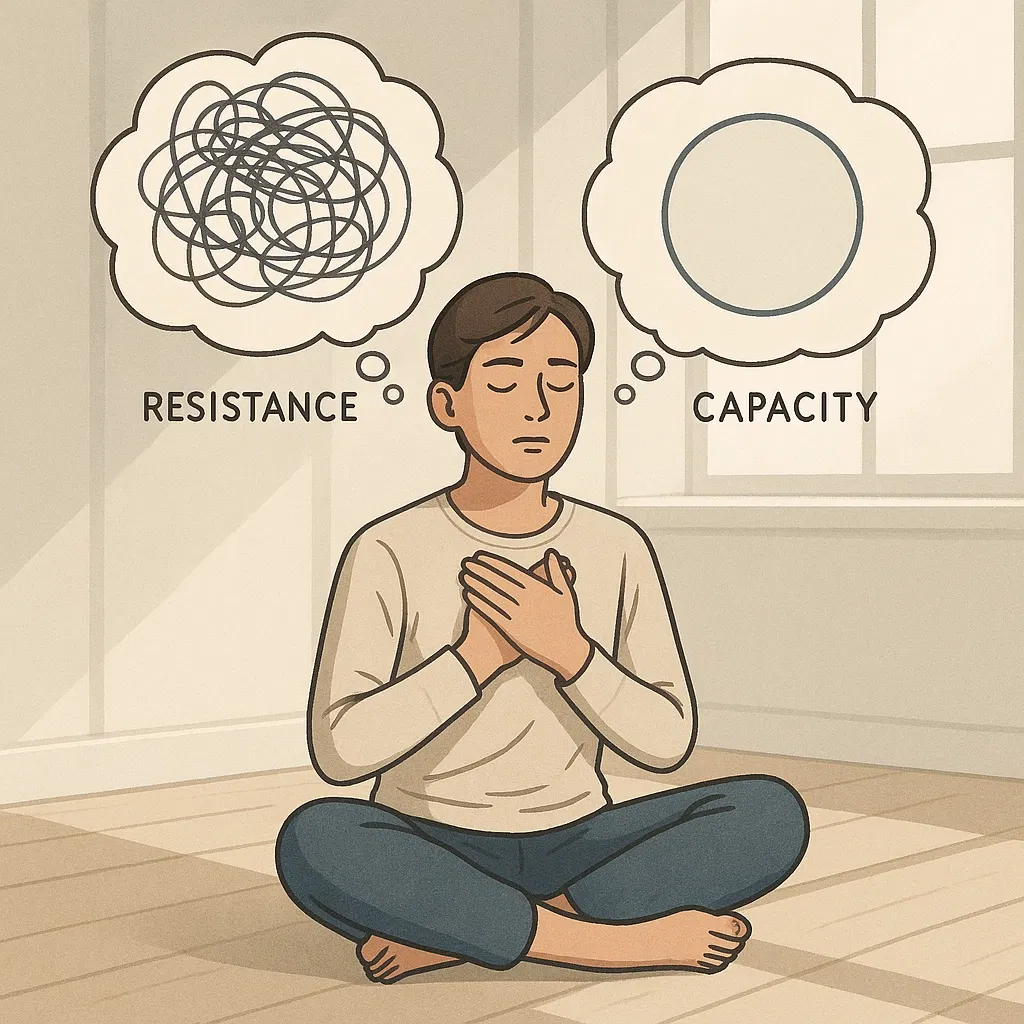
If you’re the one being stonewalled, don’t chase them. That just increases the threat. Breathe. Regulate yourself first. When both of you operate from a place of capacity rather than resistance, the ghost returns to the body.

4. The Plastic Smile: People-Pleasing for "Safety"
Are you a "Yes" machine? Do you morph your personality to fit what you think your partner or your kids want? This is "Fawning," and it’s a survival pattern that kills intimacy. You can’t truly connect with someone who isn't actually there. When you hide your true needs, you’re effectively lying to the people you love.
The Co-regulation Fix:
Start getting "better at feeling" the resentment that builds when you say yes but mean no. Use the relationship as a laboratory for truth. Practice saying, "I’m scared to say this because I want you to be happy, but I actually need X."
When you are authentic, your nervous system settles. It stops vibrating with the anxiety of a lie. Your partner might be surprised, but they will finally be meeting you, not the mask you’ve been wearing.
5. Projecting Phantoms: Mind-Reading and Catastrophizing
"He didn't text back, so he must be cheating." "She’s quiet, so she must be bored with me."
Your brain is a meaning-making machine, and when it’s stressed, it makes up horror stories. You start reacting to a version of your partner that only exists in your head. This creates a feedback loop of anxiety that can tear a house down.
The Co-regulation Fix:
Check the data. Instead of spiraling, ask for a "Vibe Check."
"Hey, I’m telling myself a story that you’re mad at me. Is that what’s happening, or is my system just loud today?"
This allows your partner to provide the co-regulating reassurance you need: "I'm just tired, babe. We’re good." Boom. The phantom vanishes.
6. The "Roommate" Coma: Losing the Spark
Life is heavy. Logistics, bills, and schedules can turn a passionate romance into a corporate merger. You stop being lovers and start being co-managers of a household. Your nervous systems become "functionally numb." You aren't fighting, but you aren't alive either.
The Co-regulation Fix:
Micro-doses of connection. A 20-second hug. Looking into each other's eyes for two minutes without talking. These aren't just "cute" ideas; they are biological imperatives. They trigger oxytocin and signal to your lizard brain that this person is your "tribe," not just a coworker. To be more peaceful, you must first feel safe enough to be playful.
7. The Mechanical Heart: Expecting Your Partner to Be a Robot
We often judge our partners for having emotions. "You're too sensitive," or "Just be logical." We want them to self-regulate so we don't have to deal with their "mess." But humans are not closed systems. We are biological mirrors.
If you want your partner to be calmer, you must become the anchor.
The Co-regulation Fix:
Accept the "Messy Human" contract. When your partner is spiraling, don't meet them in the spiral. And don't try to "fix" them like a broken toaster. Simply stay present.
"I see you're hurting. I'm right here."
Your calm presence is the most powerful medicine in the world. This is also the secret to how to be a better parent. Your kids don't need a perfect parent; they need a regulated one who can hold their big emotions without breaking.

The Visionary Path Forward
Relationships are the ultimate psychedelic trip. They show us the fractals of our own shadows, our deepest fears, and our most radiant potential. But you can't navigate that journey if you're constantly stuck in a survival pattern.
If you’re tired of the same old arguments and the feeling of being "lonely together," it’s time to stop looking at the symptoms and start looking at the system: your nervous system.
You were never taught how to feel. You were taught how to cope. It’s time to unlearn the survival strategies that are keeping you small and disconnected.
Ready to break the cycle?
Start by identifying the patterns that are running your life. Download our Free Survival Patterns Guide to see exactly how your nervous system is hijacking your connections.
And if you’re ready to dive deep: to move beyond the "talk" and into the actual transformation of your life and relationships: let's get on a call. We don't do "coaching" in the traditional sense; we facilitate the evolution of your being.
Book Your Call with Satori Prime
Your relationships don't need more "work." They need more presence. They need a version of you that is no longer afraid to feel.