
Conflict isn’t just a disagreement about who left the dishes in the sink or why the budget is blown. It’s a full-body, high-voltage chemical event. Most people treat conflict like a chess match where the goal is to checkmate the other person into submission. But while you’re busy trying to win the argument, your nervous system is screaming for safety.
We’ve all been there: the heat rising in your chest, the throat tightening, the sudden urge to either scream at the top of your lungs or vanish into the floorboards. This isn't just "stress." This is your biology taking the steering wheel.
At Satori Prime, we live by a singular, transformative philosophy: “Stop trying to make yourself feel better and simply get better at feeling.”™
When you stop running from the discomfort of conflict and start understanding the invisible dance between your nervous system and theirs, everything changes. This is the art of co-regulation. It’s the secret sauce to being a better parent, a more present partner, and a leader who actually commands respect rather than demanding it.
Here are the 7 mistakes you’re making in conflict, and the co-regulation shifts that will save your sanity and heal your connections.
1. Letting Your Nervous System Pilot Your Meat-Suit
Most people think they are arguing with words. They aren’t. They are two reactive nervous systems bouncing off each other like pinballs in a dark room. When you get triggered, your prefrontal cortex (the part of your brain that handles logic, empathy, and long-term thinking) goes offline. You are literally operating from a primitive survival state.
In this state, you aren't trying to solve a problem; you're trying to not get eaten by a tiger that doesn't exist. You say things you don’t mean, you get defensive, and you lose the ability to actually hear what the other person is saying.
The Co-Regulation Fix: Regulate First, Relate Second.
Stop the conversation. Use your body to signal safety to your brain. Take a long, slow exhale. Soften your eyes. Drop your jaw. By shifting your own internal state, you create a "safety anchor" that the other person’s nervous system can unconsciously latch onto. You can’t lead someone to a place of peace if you’re currently at war with yourself.

2. Playing to Win the War, but Losing the World
We have a massive addiction to being right. It’s a hit of dopamine for the ego. But in a relationship, whether it’s with your spouse or your child, if one person "wins," the relationship loses. When your goal is victory, you treat the other person as an opponent to be conquered rather than a partner to be understood.
This creates a "threat" signal in the other person. Their nervous system detects your need to win and immediately goes into defense mode. Now you have two people trying to survive each other instead of two people trying to align with each other.
The Co-Regulation Fix: Prioritize Connection Over Correction.
Shift the goalpost. Ask yourself: "Do I want to be right, or do I want to be in connection?" When you explicitly prioritize the relationship, saying things like, "I care about how you feel more than I care about this argument", you drop the drawbridge. You create a space where co-regulation can actually happen.
3. The "Amateur Shrink" Syndrome
Nothing escalates a conflict faster than telling someone why they are doing what they’re doing. "You’re just saying that because you’re tired," or "You’re acting exactly like your mother."
This is a form of psychic violence. You are projecting your interpretations onto their experience, which feels like an invasion. It triggers an immediate "fight" response because you are essentially trying to tell them who they are.
The Co-Regulation Fix: Own Your Experience, Not Their Motives.
Instead of psychoanalyzing them, describe the ripples in your own pond. "When I hear that tone, my chest gets tight and I feel like I’m being dismissed." This is the core of improving relationships. You aren't attacking them; you are revealing yourself. This vulnerability invites the other person to soften rather than armor up.
4. Fake Listening (The "Waiting-to-Speak" Loop)
Most "listening" is just a pause in the music while you reload your gun. You aren't taking in their words; you're looking for flaws in their logic so you can dismantle them the moment they take a breath.
Your nervous system is a lie detector. If you are "listening" while secretly judging or preparing a rebuttal, the other person feels it. They feel unheard, which triggers their survival brain, and the cycle of escalation continues.
The Co-Regulation Fix: Use Listening as a Regulation Tool.
True listening is an act of co-regulation. When you truly see and mirror someone’s experience, "I’m hearing that you’re feeling overwhelmed and unsupported right now, is that right?", their nervous system begins to de-escalate. They feel "felt." This is how you be more peaceful in the heat of the moment. You aren't agreeing with them; you are witnessing them.
5. Ambushing and Bad Timing
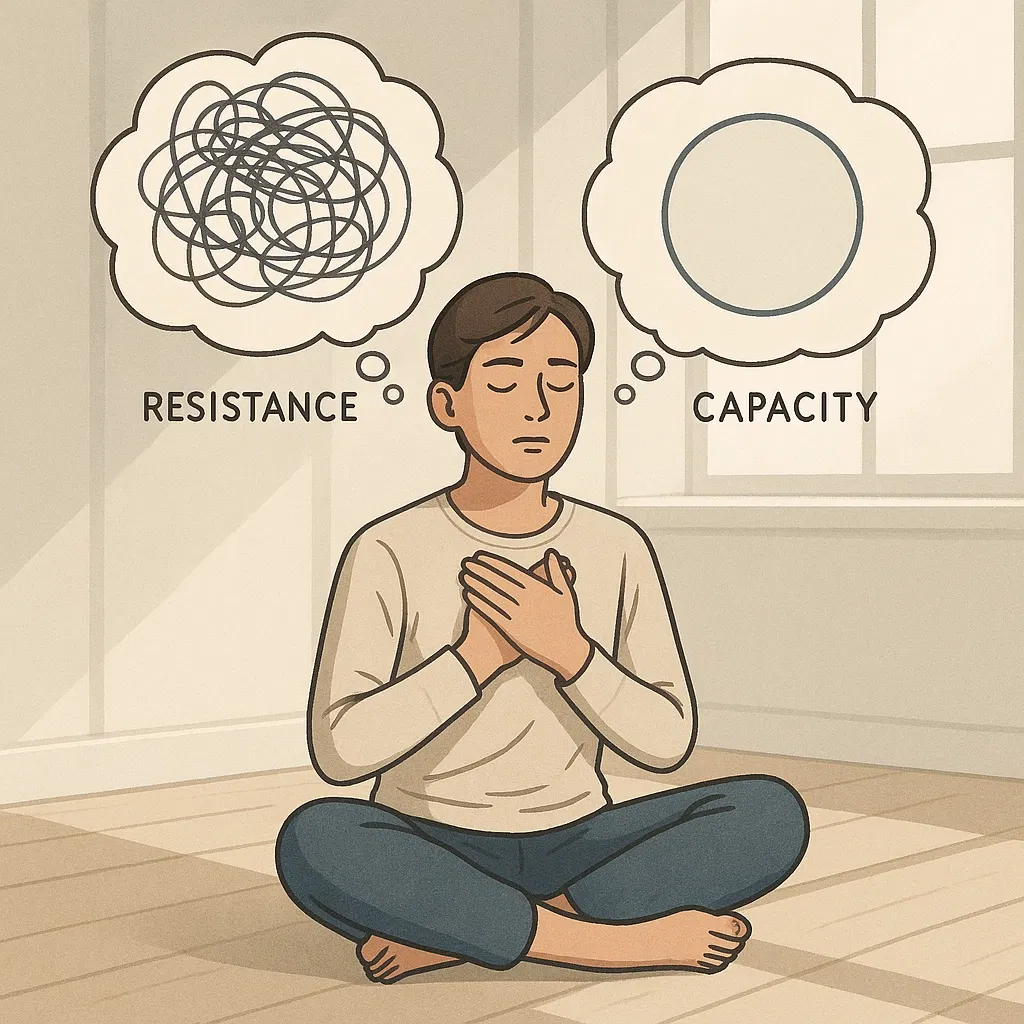
Trying to have a deep, soul-searching conversation when one person is exhausted, hungry, or halfway out the door is a recipe for disaster. When your system is already taxed, you have zero "buffer" for conflict. You are already at your capacity, and any perceived threat will push you straight into a meltdown or a shutdown.

The Co-Regulation Fix: Consent and Capacity.
Check in before you dive in. "I have something important to discuss. Do you have the emotional bandwidth for it right now?" If the answer is no, respect it. Scheduling a time to talk allows both people to enter the conversation with a regulated nervous system, which dramatically increases the chances of a positive outcome. This is a game-changer if you want to be a better parent: stopping the "ambush" parenting and moving into conscious connection.
6. The "Museum of Past Grievances"
In the heat of an argument, it’s tempting to bring up every mistake the person has made since 2014. We do this to build a "case" against them, hoping that if we provide enough evidence, they’ll finally admit they’re the problem.
All this does is overwhelm the nervous system. It’s like trying to drink from a firehose. The brain can’t process ten different conflicts at once, so it just shuts down or explodes.
The Co-Regulation Fix: Stay in the Present Ripple.
What is happening right now? Deal with the current feeling, the current situation. If there’s a pattern, address it later when things are calm. In the middle of the storm, stay focused on finding a way back to safety, not on cataloging the history of the rain.
7. The Lone Wolf Fallacy
We’ve been taught that "self-regulation" is the ultimate goal. That you should be able to sit in a room alone and get yourself perfectly calm before you talk to anyone. But humans are social animals. Our nervous systems are designed to regulate with each other.
Thinking you have to "fix yourself" before you can engage with your partner or child actually creates more isolation and shame. It reinforces the idea that you are "broken" when you’re actually just human.
The Co-Regulation Fix: Use the Relationship as the Medicine.
Sometimes, the best way to regulate is to ask for help. "I’m really spun out right now. Can you just hold my hand for a minute while I breathe?" This is the height of visionary leadership. It’s admitting that we are interconnected. When you allow someone to help regulate you, you give them the gift of being a source of safety, which strengthens the bond for both of you.

The Visionary Path to Alignment
Conflict isn't an obstacle to the relationship; it’s the doorway to a deeper one. But you can't walk through that door if you’re trapped in your survival patterns.
The psychedelic truth of human connection is that we are constantly "broadcasting" our internal state to everyone around us. If you are vibrating with anxiety, judgment, or the need to control, you will breed that same energy in your home and your business.
But when you master the art of co-regulation: when you get better at feeling your own internal landscape and staying present with the discomfort: you become a lighthouse. You stop trying to manipulate people into behaving better and you start inviting them into a higher state of being by simply being in your presence.
Your Next Step
Most of us are running old "survival scripts" that were written when we were children. These patterns are what keep us stuck in the same arguments, the same frustrations, and the same emotional burnout.
If you’re ready to stop the cycle and finally learn how to regulate your system for real, deep, lasting connection, we’re here to help.
1. Identify Your Survival Patterns:
Most people don't even know they're in a pattern until the damage is done. Grab our free guide to the 5 most common survival patterns and see which ones are running your life.
👉 Download the Survival Patterns Guide Here
2. Map Your Path to Peace:
If you’re tired of the constant friction and ready to step into a life of alignment and visionary leadership, let’s talk. We can help you navigate the noise and get back to the truth of who you are.
👉 Book Your Free Strategy Call Here
Remember: The world doesn't need more people who are "right." It needs more people who are regulated, present, and brave enough to feel it all.
Stop trying to make yourself feel better. Get better at feeling. The rest will follow.
For more insights on nervous system regulation and personal transformation, visit our blog or learn more about our philosophy at Satori Prime.